
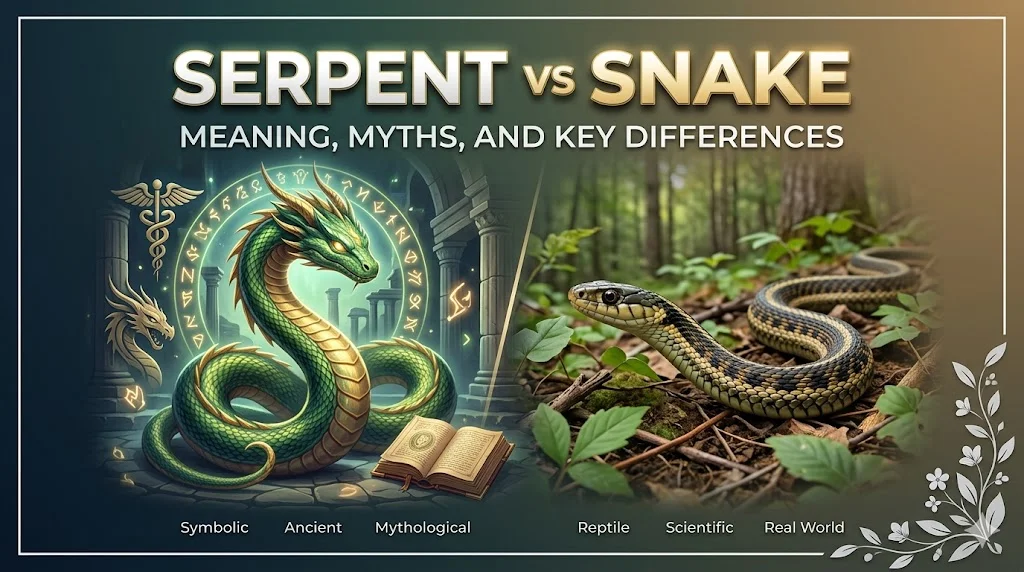
Serpents and snakes often appear in stories, myths, and scientific discussions, yet many people confuse the two. While “serpent” carries symbolic, mythological, or literary weight, “snake” refers to the real, biological creature. Understanding their differences helps readers appreciate cultural stories, interpret symbolism accurately, and recognize the science behind these fascinating reptiles. In this guide, you will learn the origins, symbolism, cultural significance, biological facts, and modern interpretations of both serpents and snakes. By the end, you’ll clearly distinguish between the myth and reality and grasp how language and culture shape our perception.
Definition
A serpent is primarily a symbolic or mythological term often representing wisdom, danger, or transformation, while a snake is a real, legless reptile classified scientifically in the suborder Serpentes. Though “serpent” may occasionally describe a real snake in literature, it usually conveys symbolic meaning in religious or cultural narratives.
Word Origins and Etymology
The word “serpent” comes from the Latin serpens, meaning “to creep” or “crawl,” historically used in literature and religious texts. “Snake” originates from the Old English snaca, referring to the actual animal. These linguistic roots reflect the difference between symbolic storytelling and biological classification.
Linguistic Insight
Over time, “serpent” evolved to carry mythological and literary connotations, while “snake” remained a scientific term. In literature and theology, serpents often symbolize moral lessons or cosmic forces, whereas in science, snakes are studied for their anatomy, behavior, and ecological role.
Serpent vs Snake: Core Differences at a Glance
| Feature | Serpent | Snake |
| Meaning | Symbolic or mythological term | Scientific name for reptiles |
| Usage | Religion, myths, literature | Biology and zoology |
| Connotation | Symbolism, mystery, evil/wisdom | Neutral animal reference |
| Scientific Accuracy | Not a scientific classification | Scientific classification |
| Cultural Role | Mythology and symbolism | Real animals in nature |
Serpent in Mythology and Ancient Symbolism
Serpents appear in myths worldwide, representing both wisdom and danger. They symbolize transformation, power, and mystery, and appear prominently in religious texts, ancient stories, and cultural rituals.
Biblical Symbolism
In the Bible, serpents often symbolize temptation, deceit, or evil. Stories such as Adam and Eve portray serpents as agents of moral lessons, highlighting their role as cautionary symbols in spiritual contexts.
Greek Mythology
Greek myths depict serpents as guardians, monsters, or agents of transformation. From the multi-headed Hydra to Medusa, serpents were often powerful and symbolic creatures, blending danger with mystical meaning.
Hindu Beliefs
In Hinduism, serpents (or nagas) symbolize protection, cosmic energy, and spiritual wisdom. They appear in mythology guarding treasures or sacred sites, embodying both divine and transformative power.
Mesoamerican Culture
Civilizations like the Aztecs and Mayans revered feathered serpents, representing creation, knowledge, and cosmic order. Serpent deities were central to rituals and artistic depictions, emphasizing cultural reverence and symbolism.
Common Symbolic Meanings
Across cultures, serpents often symbolize:
- Wisdom and knowledge
- Transformation or rebirth
- Danger, temptation, or chaos
Snakes in Religion, Culture, and Folklore
Snakes are living reptiles, yet they are entwined with cultural beliefs. Many societies view them with fear, reverence, or respect, assigning spiritual, protective, or mystical roles in folklore.
Ancient Egypt
Snakes symbolized protection, royalty, and divine power. Pharaohs often wore serpent-shaped crowns, and gods were depicted with serpentine features, emphasizing authority and guardianship.
Native American Traditions
Snakes were associated with fertility, healing, and nature. Tribal stories often portrayed snakes as spiritual guides or mediators, highlighting respect for natural cycles and animal wisdom.
African Folklore
African myths often feature snakes as creators, transformers, or tricksters. They appear in tales emphasizing life cycles, change, and lessons about respect for nature.
Modern Symbolism
Today, snakes appear as symbols of rebirth, medicine (the caduceus), and transformation. Their representation spans media, logos, and literature, blending ancient symbolism with contemporary meaning.
Serpent Symbolism Across Eras
From ancient civilizations to modern culture, serpent symbolism has evolved. Early myths emphasized fear and wisdom, while modern interpretations highlight rebirth, transformation, and ecological respect, reflecting cultural reinterpretation over centuries.
Scientific Reality: What Defines a Snake
Snakes are legless reptiles in the suborder Serpentes, classified under reptiles. They possess unique adaptations like flexible jaws, scales, and specific hunting behaviors, playing crucial roles in ecosystems.
Classification
Snakes belong to the Reptilia class and Serpentes suborder. This taxonomic classification differentiates them from other reptiles and highlights their evolutionary adaptations.
Key Physical Features
Snakes have elongated bodies, flexible jaws, scaly skin, and lack limbs. These adaptations allow efficient movement, feeding, and survival in diverse habitats.
Behavioral Traits
Snakes display varied hunting strategies, defense mechanisms, and habitat preferences. Some are ambush predators, others active hunters, showcasing adaptability across ecosystems.
Fun Fact
Some snakes can detect infrared heat, climb trees, or swim, demonstrating extraordinary adaptations that help them thrive in unique environments.
The Misunderstood Serpent: Where Myth Meets Biology
Fear and superstition often blur the line between mythological serpents and real snakes. Understanding the biological reality helps dispel myths and promotes respect for these creatures.
Why People Feared Them
Cultural myths, dangerous species, and innate human fear responses contributed to the widespread fear of snakes and serpents throughout history.
Myth to Reality Examples
Stories of giant or poisonous serpents often exaggerate real snake traits. Scientific studies clarify these myths, showing that most snakes are harmless and ecologically beneficial.
Serpents and Snakes in Literature and Art
Serpents appear widely in literature and visual arts, often symbolizing knowledge, temptation, or transformation. They remain enduring motifs across classical and modern works.
Biblical and Classical References
Classical literature and biblical texts use serpents as moral symbols, teaching lessons or embodying mystical forces, emphasizing their symbolic power over factual reality.
Modern Literature
Modern writers employ serpents metaphorically in novels, fantasy, and poetry, representing danger, change, or wisdom in narrative storytelling.
Art and Symbolism
Artists depict serpents symbolically to convey transformation, danger, or spiritual themes. Cultural motifs often blend realism with mythology to evoke meaning.
Identifying Serpents and Snakes: Visual and Descriptive Guide
Understanding differences between symbolic serpents and real snakes aids recognition in literature, art, and nature. Visual and behavioral traits help distinguish myths from reality.
Visual Features
Serpents are often exaggerated with large size or mystical patterns in art, while snakes exhibit real anatomical features such as scales, body shape, and coloration.
Behavioral Traits
Mythical serpents may perform symbolic acts, whereas real snakes hunt, defend, and interact naturally with their environment according to biological instincts.
Modern Interpretations and Pop Culture Relevance
Serpents and snakes remain popular in modern media, fashion, logos, and storytelling, symbolizing mystery, power, and transformation while inspiring ecological awareness.
Symbolism in Modern Culture
Snakes appear in films, games, and design as metaphors for wisdom, danger, and rebirth, reflecting their enduring symbolic presence.
Conservation Message
Protecting snake species maintains ecosystem balance. Awareness campaigns highlight their ecological role and combat misconceptions that fuel unnecessary fear.
Key Takeaways
- Serpents are symbolic, snakes are real.
- Cultural narratives shape perceptions.
- Snakes play vital ecological roles.
- Understanding context ensures accurate usage.
Self Assessment
- What is the symbolic meaning of a serpent?
- How does a snake differ biologically from a serpent?
- Name one cultural belief involving serpents.
- What is a key physical feature of snakes?
- Give an example of serpent symbolism in literature.
Answers:
- Wisdom, danger, or transformation.
- Snakes are real reptiles; serpents are symbolic.
- Hindu naga guarding treasures.
- Flexible jaw or legless body.
- Biblical serpent tempting Adam and Eve.
Final Thoughts
Serpents and snakes, while often confused, occupy distinct spaces in human understanding. Serpents primarily exist in myth, literature, and religious symbolism, embodying wisdom, transformation, or danger. Snakes, on the other hand, are living reptiles with unique physical features and behaviors essential to ecosystems. Cultural stories and art have shaped our perception of serpents and snakes for millennia, influencing fear, reverence, and moral lessons. By distinguishing symbolic serpents from biological snakes, readers can appreciate mythological narratives without conflating them with real-life creatures. Modern interpretations continue to honor ancient symbolism while promoting ecological awareness. Recognizing these distinctions empowers clearer communication, deeper cultural understanding, and responsible conservation. The next time you encounter a “serpent” in a story or a “snake” in nature, you’ll know whether to think metaphorically or scientifically. Appreciating both their myth and reality enriches knowledge and nurtures respect for these fascinating creatures, blending history, culture, and biology in a meaningful way.
FAQs
What is the difference between a serpent and a snake?
A serpent is a symbolic or mythological creature often representing wisdom, danger, or transformation. A snake is a real, legless reptile studied in biology. Serpents appear in literature and religion, while snakes exist in nature.
Are serpents real or mythical?
Serpents are primarily symbolic or mythological. They appear in religious texts, literature, and folklore to convey lessons, power, or transformation. While the term may describe real snakes metaphorically, most serpents in stories are not actual animals.
Why is the term serpent used in mythology?
Serpents symbolize wisdom, danger, rebirth, or transformation in myths. Their mysterious, elusive nature made them powerful narrative tools in teaching moral lessons, explaining creation, or representing cosmic forces.
How are snakes viewed in different cultures?
Culturally, snakes are seen as protectors, healers, tricksters, or symbols of fertility. Perceptions vary: some societies revere them, while others fear them, reflecting environmental interactions and spiritual beliefs.
Can serpent and snake be used interchangeably?
Occasionally, “serpent” may describe a real snake in literary contexts, but usually, “serpent” conveys symbolism, while “snake” refers to actual reptiles. Correct usage depends on context.
Why do many religions reference serpents?
Religions use serpents as metaphors for temptation, wisdom, protection, or chaos. They communicate moral or spiritual lessons, linking human behavior to symbolic narratives.
Are all snakes dangerous?
No, most snakes are harmless to humans. Only a minority are venomous. Snakes have varied ecological roles and contribute to controlling pests and maintaining biodiversity.
What role do snakes play in ecosystems?
Snakes act as predators and prey, helping maintain ecological balance. They control rodent populations, support food chains, and contribute to healthy ecosystems.
Why are snakes often misunderstood?
Snakes are misunderstood due to myths, fear, and cultural stories exaggerating their danger. Misconceptions often lead to unwarranted fear and harm to both humans and snakes.
How can we protect snake species today?
Protection includes habitat preservation, education to reduce fear, wildlife conservation programs, and discouraging indiscriminate killing of snakes. Awareness promotes coexistence and ecosystem health.
What is the symbolism of a serpent in Greek mythology?
In Greek mythology, serpents represent guardianship, transformation, and mystery. Creatures like the Hydra and Medusa symbolize danger and power, blending fear with moral lessons.
How does serpent symbolism differ across cultures?
Serpents can symbolize wisdom, danger, rebirth, or divine power. Differences arise based on local myths, religious narratives, and environmental experiences shaping cultural interpretations.
What are common features of snakes biologically?
Snakes have elongated, legless bodies, scales, flexible jaws, and specialized sensory organs. These adaptations enable hunting, movement, and survival in diverse habitats.
Why were serpents feared historically?
Fear stemmed from venomous species, cultural myths, and symbolic representations of evil or chaos in religious texts and folklore.
How is the serpent represented in art?
Art often depicts serpents as coiled, winged, or multi-headed creatures symbolizing danger, wisdom, or transformation, blending realism with mythological features.
Can serpents symbolize positive traits?
Yes, serpents symbolize wisdom, healing, rebirth, and protection in many cultures, highlighting their dual nature in symbolism.
What is a fun fact about snakes?
Some snakes can detect heat, climb trees, or swim efficiently. Their abilities make them adaptable predators with fascinating ecological roles.
How do serpents and snakes appear in literature?
Serpents often symbolize temptation or transformation, while snakes may appear as real animals. Both serve narrative purposes reflecting culture and morality.
Are serpents always depicted as evil?
No, serpents can also symbolize wisdom, protection, and life cycles, depending on cultural context and storytelling.
What modern lessons can snakes teach humans?
Snakes teach ecological balance, adaptability, and respect for nature. Conservation efforts emphasize understanding rather than fear.

Amelia Wright focuses on making figurative language easy to understand. Her writing explains similes, metaphors, and word meanings using relatable examples. She aims to help readers recognize subtle differences in usage and apply them correctly in both academic and casual writing.