When it comes to writing clearly, few small errors cause as much confusion as mixing up “that’s” and “thats.” Many people type “thats” by mistake, thinking it’s acceptable, but it’s always grammatically incorrect. Understanding the difference is essential for writing professionally, improving readability, and maintaining credibility. In this guide, you’ll learn why “that’s” is the correct form, the two ways it can be used, common mistakes to avoid, and how to use it naturally in everyday conversation, professional writing, creative work, and digital communication. By the end, you’ll be confident in spotting errors, applying the rules correctly, and avoiding the “thats” trap in all your writing.
Definition: What Is “That’s” vs “Thats”?
“That’s” is a contraction combining “that is” or “that has,” using an apostrophe to show missing letters. “Thats” omits the apostrophe and is always incorrect in standard English. Correct usage of “that’s” ensures clarity, proper punctuation, and readability.
- Keywords: Thats Or That’s, grammar rule, apostrophe usage
- Examples: That’s my favorite book. / That’s been finished already.
Understanding the Basics: “That’s” vs. “Thats”
The main difference is simple: “that’s” is a valid contraction, while “thats” is an error. Using the apostrophe properly prevents misunderstandings in both casual and formal writing.
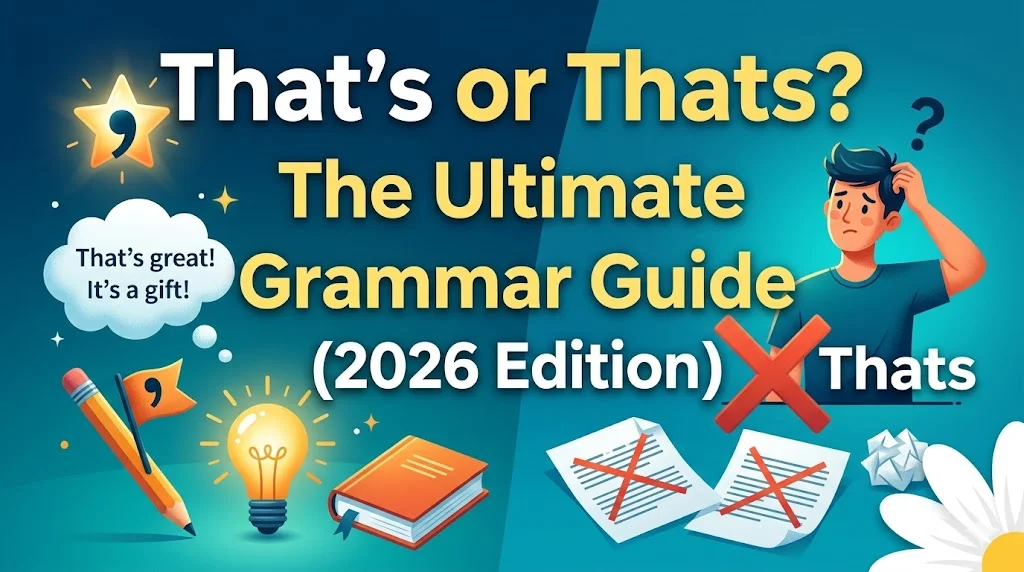
- Examples: That’s the way to do it. ❌ Thats the way to do it.
The Two Correct Meanings of “That’s”
“That’s” as a Contraction for That Is
Use this form to replace “that is” in present tense sentences.
- Example: That’s a great idea. (That is a great idea)
“That’s” as a Contraction for That Has
Use this form to replace “that has” in present perfect tense sentences.
- Example: That’s been completed on time. (That has been completed on time)
Why “Thats” Is Never Grammatically Correct
Omitting the apostrophe creates a spelling error and reduces clarity. Even in informal texts, “that’s” should be used to maintain professionalism and accuracy.
- Example: ❌ Thats amazing! ✅ That’s amazing!
Common Mistakes and Why They Happen
People often type “thats” due to fast typing, autocorrect, or a misunderstanding of contractions. Recognizing these habits helps prevent repeated errors.
- Example: ❌ I think thats right. ✅ I think that’s right.
Comparison Table: “That’s” vs “Thats”
| Form | Correctness | Meaning | Example |
| That’s | Correct | That is/has | That’s a good idea |
| Thats | Incorrect | None | ❌ Thats a good idea |
How to Use “That’s” Naturally in Sentences
Everyday Conversation
Use “that’s” casually in spoken English to replace “that is” or “that has.”
- Example: That’s funny! / That’s been a long day.
Professional Writing
Maintain clarity and credibility by using “that’s” correctly in business emails, reports, or documents.
- Example: That’s the approach I recommend.
Creative Writing & Storytelling
Use “that’s” in dialogue or narration to make speech sound natural.
- Example: “That’s incredible!” she shouted.
Social Media & Texts
Even online, correct usage improves readability and avoids confusion.
- Example: That’s amazing news! / That’s been trending all day.
Why It Matters: Grammar, Clarity & Credibility
Clarity in Communication
Correct contractions prevent misreading and maintain precise meaning.
Professionalism in Writing
Using proper grammar signals competence and attention to detail.
Digital Writing Impact
Search engines and readers favor content that is clear, accurate, and professional.
Linguistic Insight: Why Apostrophes Matter
Apostrophes indicate omitted letters in contractions. Misplacing or omitting them changes meaning and makes text appear unpolished.
- Example: That’s = that is/has, Thats = incorrect
The “Honda That’s” Exception
Some brand names or marketing materials use “That’s” creatively, but this is a stylistic choice rather than grammar.
- Example: Honda That’s the Spirit (advertising tagline)
Expert Opinion: Grammar Rules in Modern English
Even as language evolves, contractions with apostrophes remain the standard for clear writing in English.
Quick Grammar Recap: The “That’s” Checklist
- Always include the apostrophe.
- Determine if it replaces “that is” or “that has.”
- Proofread to avoid “thats.”
- Use correctly in both casual and formal contexts.
Self-Assessment Quiz
- Replace with the correct form: “I think thats fine.”
- Identify if this is correct: “That’s been helpful.”
- Fill in the blank: “___ a great idea!”
- Choose the correct sentence: “Thats my favorite” / “That’s my favorite”
Answers to Self-Assessment
- That’s fine.
- Correct, “That’s been helpful.”
- That’s a great idea!
- That’s my favorite.
Conclusion About Thats Or That’s
Mastering “that’s” versus “thats” is essential for clear and professional writing. “That’s” is always the correct contraction for “that is” or “that has,” while “thats” is a common spelling mistake that reduces readability and credibility. Using proper punctuation ensures your messages are precise and trustworthy. Whether you’re writing for work, school, or casual communication, attention to apostrophes improves your writing’s impact. Practice, proofreading, and awareness of common errors will make “that’s” usage second nature. Remember, good grammar is not just about rules—it’s about clear, confident, and effective communication. By choosing the correct form consistently, you demonstrate professionalism and command of the English language.
Frequently Asked Questions
What is the difference between “that’s” and “thats”?
“That’s” is a contraction for “that is” or “that has,” while “thats” is always incorrect.
Is “thats” ever correct in English?
No, “thats” is considered a spelling mistake and should be avoided in all standard writing.
How do I use “that’s” in a sentence?
Use “that’s” to mean “that is” or “that has,” depending on context. Example: “That’s been done.”
Why do people confuse “that’s” with “thats”?
Fast typing, autocorrect, and lack of punctuation knowledge often cause this error.
What are some tips to avoid the “thats” mistake?
Mentally expand “that’s” to “that is” or “that has” and proofread your writing carefully.
Can “that’s” mean two different things?
Yes, it can mean “that is” or “that has” depending on sentence context.
Is “that’s” formal or informal?
It’s acceptable in informal and semi-formal writing; in formal writing, full forms “that is/has” may be preferred.
Does using “thats” affect readability or SEO?
Yes, incorrect grammar reduces clarity and trust, impacting readability and engagement.
How can I quickly check if “that’s” is correct?
Try expanding it: if “that is” or “that has” fits, then it’s correct.
Are apostrophes always necessary in contractions?
Yes, apostrophes indicate omitted letters, essential for correct contractions.
How do I remember the difference between “that’s” and “thats”?
Think of the apostrophe as replacing the missing letter(s) in “that is/has.”
Can “that’s” be used in creative writing?
Yes, especially in dialogue and informal narration for natural speech.
What happens if I write “thats” in professional emails?
It appears unprofessional and can reduce credibility or clarity.
Is “that’s” commonly used in spoken English?
Yes, it is widely used in conversation as a natural contraction.
Can “that’s” appear at the beginning of a sentence?
Yes, as in: “That’s what I meant.”
Should I avoid “that’s” in academic writing?
Not necessarily, but using full forms “that is” or “that has” is often preferred.
How can autocorrect affect “that’s” usage?
Autocorrect may incorrectly suggest “thats,” so proofreading is crucial.
Are there regional differences in using “that’s”?
Usage is standard in English-speaking regions, though punctuation awareness varies.
Can I replace “that’s” with “that is” or “that has” for clarity?
Yes, especially in formal contexts to avoid contractions.
How do I teach beginners the “that’s” rule?
Explain the apostrophe shows omitted letters, provide examples, and give practice sentences.

Amelia Wright focuses on making figurative language easy to understand. Her writing explains similes, metaphors, and word meanings using relatable examples. She aims to help readers recognize subtle differences in usage and apply them correctly in both academic and casual writing.