
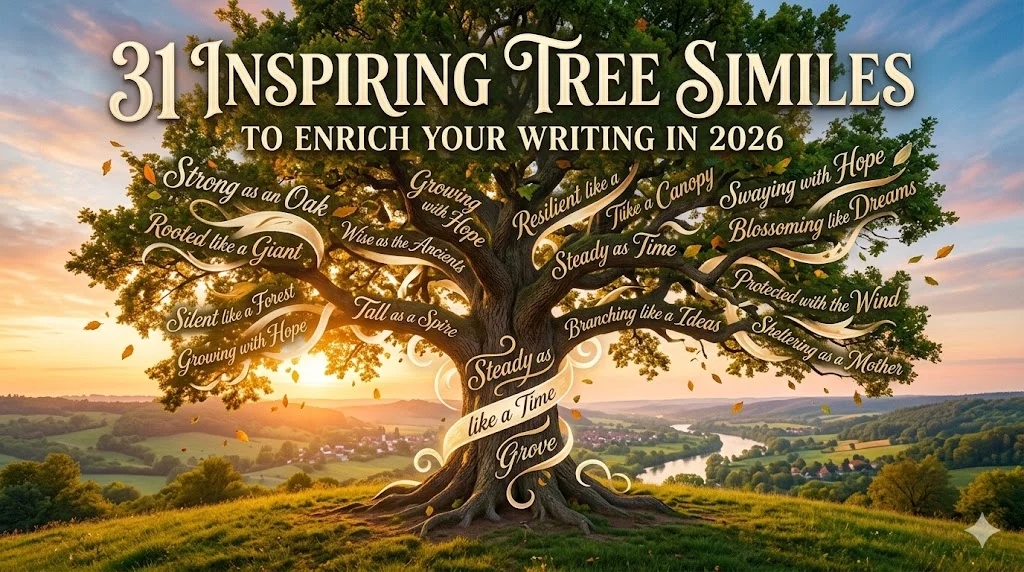
Trees have inspired writers for centuries, not just for their beauty but also for the powerful metaphors and similes they evoke. Using tree similes can transform ordinary writing into vivid imagery, helping readers connect emotionally and visualize ideas more clearly. Whether you’re crafting poetry, storytelling, or essays, tree similes add depth, elegance, and relatability. In this guide, you’ll explore 31 carefully chosen tree similes, learn their meanings, see practical examples, and discover tips to use them effectively in your writing. By the end, you’ll have a toolbox of natural comparisons to enhance your creative expression and bring your words to life.
What is a Simile?
A simile is a figure of speech that compares two unlike things using the words “like” or “as.” Writers use similes to create vivid imagery, make abstract ideas relatable, and add emotional depth. For example, “Her smile was as bright as the sun” or “The wind howled like a wild animal” instantly helps the reader picture the scene. Similes are versatile and beginner-friendly tools that improve clarity and engagement in writing.
Definition of Tree Similes
Tree similes specifically use trees to compare qualities, actions, or emotions. They draw from the traits of trees—strength, flexibility, growth, and beauty—to create descriptive imagery in writing. For example, saying someone is “strong as an oak” conveys both physical and moral resilience. Tree similes connect human experiences to nature, making descriptions relatable and vivid.
31 Tree Similes You’ll Love
| Simile | Meaning | Example in Sentence |
| Strong as an oak | Unshakable strength | “She stood strong as an oak in the face of criticism.” |
| Tall as a pine | Great height or stature | “The new skyscraper was tall as a pine in the skyline.” |
| Roots deep as wisdom | Knowledgeable, grounded | “His roots were deep as wisdom, guiding every decision he made.” |
| Leaves like whispers | Soft, gentle presence | “The leaves rustled like whispers in the quiet garden.” |
| Branches like open arms | Welcoming, embracing | “The old tree’s branches stretched like open arms to the children.” |
| Strong as cedar | Durable and resilient | “Her determination was strong as cedar, enduring every challenge.” |
| Fragile as a sapling | Delicate, easily affected | “His confidence was fragile as a sapling in a storm.” |
| Life branching out like a tree | Expanding in many directions | “Her career branched out like a tree, touching multiple fields.” |
| Quiet as a forest of birch | Peaceful, silent | “The library was quiet as a forest of birch on a winter morning.” |
| Bending like a willow | Flexible, adaptable | “He adapted to change, bending like a willow in the wind.” |
| Old as an olive tree | Ancient, enduring | “The building stood old as an olive tree, full of history.” |
| Blooming like cherry blossoms | Vibrant, flourishing | “Her creativity was blooming like cherry blossoms in spring.” |
| Falling like autumn leaves | Letting go, graceful decline | “Her worries fell away like autumn leaves in the breeze.” |
| Silent as snow on branches | Absolute quiet, calm | “The night was silent as snow on branches after the storm.” |
| Firm as tree bark | Steady, dependable | “His support was firm as tree bark during difficult times.” |
| Shady like a tree in summer | Providing comfort, protection | “She offered advice, shady like a tree in summer.” |
| Twisting like roots underground | Complex, hidden connections | “Her thoughts twisted like roots underground, intricate and deep.” |
| Towering like a redwood | Imposing, impressive | “The speaker’s presence was towering like a redwood on stage.” |
| Gentle as falling petals | Soft, tender | “Her touch was gentle as falling petals on a quiet pond.” |
| Firmly rooted like a tree | Stable, unmovable | “He remained firmly rooted like a tree despite challenges.” |
| Bright as leaves in spring | Fresh, lively, optimistic | “Her ideas were bright as leaves in spring.” |
| Crooked as an old oak branch | Imperfect yet strong | “The path through life is crooked as an old oak branch.” |
| Falling like pine needles | Gradual change, letting go | “His doubts fell like pine needles after the long discussion.” |
| Shining like sunlight through leaves | Radiant, inspiring | “Her smile was shining like sunlight through leaves.” |
| Strong as tree roots | Deep strength, foundational | “Their friendship was strong as tree roots, unbreakable.” |
| Growing like a forest | Expanding rapidly | “Her business was growing like a forest, lush and fast.” |
| Quiet as shade under trees | Calm, peaceful | “The afternoon was quiet as shade under trees.” |
| Flexible as bamboo | Adaptable, resilient | “She remained flexible as bamboo when plans changed.” |
| Falling like fruit in autumn | Natural, inevitable change | “The opportunities fell like fruit in autumn, ripe for picking.” |
| Guarding like a row of trees | Protective, watchful | “The old walls stood guarding like a row of trees.” |
| Eternal as the forest | Timeless, lasting | “The legend was eternal as the forest, never fading.” |
Table of Tree Similes vs Related Expressions
| Phrase Type | Example | Usage Notes |
| Simile | Strong as an oak | Direct comparison using “as” or “like” |
| Metaphor | He is an oak | Implied comparison without “as” or “like” |
| Idiom | Turn over a new leaf | Figurative expression, not literal |
| Personification | The tree danced in the wind | Giving human qualities to trees |
Common Mistakes & Confusions with Tree Similes
- Mixing metaphors: “Strong as an oak, bending like a willow” can confuse imagery.
- Overcomplicating: Avoid using multiple similes in a single sentence unnecessarily.
- Literal interpretation: Ensure readers understand the figurative meaning.
How to Use These Tree Similes in Your Writing
- Use one or two similes per paragraph for clarity.
- Match the simile to the emotion or trait you want to emphasize.
- Avoid clichés unless intentionally for style.
- Examples: “Her patience was as steady as a cedar” or “Ideas sprouted like leaves in spring.”
Linguistic Insights on Tree Similes
Tree similes often originate from cultural and literary traditions. They rely on shared experiences of nature to convey traits like strength, flexibility, and growth. Literary texts, poetry, and folklore frequently use tree imagery to create emotional resonance. Understanding these roots enhances your ability to use similes effectively.
Expert Opinions on Using Tree Similes
Experts suggest tree similes enhance imagery, make abstract ideas relatable, and evoke emotions. Writers are encouraged to observe nature closely and use similes authentically to avoid forced comparisons. Creative writing guides emphasize simplicity and relevance to maintain reader engagement.
Self-Assessment: Are You Using Tree Similes Correctly?
- Do your similes match the intended emotion or trait?
- Are they clear to the reader?
- Do they avoid clichés unless stylistic?
- Are you balancing similes with other descriptive techniques?
- Do they enhance the narrative without overwhelming it?
Final Thoughts
Tree similes are powerful literary tools that bring writing to life. They allow writers to describe strength, growth, beauty, and emotion in a way that readers can immediately visualize. By using similes like “strong as an oak” or “gentle as falling petals,” you can enrich both creative and formal writing. Remember, the key to effective similes is simplicity, clarity, and context. Avoid overloading sentences with multiple comparisons and stay authentic to the imagery. Observing trees and nature can inspire fresh similes that feel natural and memorable. Beginners should practice integrating one or two similes per paragraph and gradually experiment with different tree qualities. Over time, using tree similes will enhance descriptive skills, emotional resonance, and storytelling appeal. With careful selection and placement, tree similes make your writing vivid, relatable, and engaging. They are not just decorative; they help readers connect with your ideas deeply. Using them thoughtfully builds authority as a writer and adds creativity without confusion.
FAQs
What is an example of a tree simile?
An example is “strong as an oak,” describing someone with great strength or resilience.
Why are trees often used in similes?
Trees symbolize strength, growth, and natural beauty, making them ideal for descriptive comparisons.
Can I use tree similes in academic writing?
Yes, but they should be relevant, clear, and used sparingly to maintain formal tone.
What’s the difference between a tree simile and a tree metaphor?
A simile uses “like” or “as” to compare, while a metaphor implies the comparison directly.
How do tree similes improve creative writing?
They create vivid imagery, evoke emotions, and make abstract ideas relatable to readers.
Are some tree similes considered clichés?
Yes, overused similes like “strong as an oak” can be clichés if used repeatedly without context.
How can I make tree similes original?
Observe nature closely and focus on unique traits, colors, or behaviors of trees for fresh comparisons.
Which tree similes are best for poetry?
Similes that evoke emotion, movement, or seasons, such as “leaves like whispers,” work best in poetry.
Can tree similes describe emotions effectively?
Absolutely. They connect human feelings to natural imagery, making emotions tangible.
How many tree similes should I use in a paragraph?
One or two per paragraph is ideal; more can overwhelm the reader.
Can tree similes be used in dialogue?
Yes, they add realism and express character emotions naturally.
Do all tree similes have to refer to real tree traits?
Not necessarily; some can be imaginative while maintaining clarity.
Can tree similes be humorous?
Yes, playful comparisons like “bending like a gummy tree” can add humor.
Are tree similes suitable for children’s books?
Yes, they help visualize actions and traits in a relatable, engaging way.
How do I choose the right tree for a simile?
Consider the trait you want to emphasize—strength, flexibility, age, or beauty.
Can tree similes work in technical writing?
Occasionally, for creative introductions or examples, but sparingly to maintain clarity.
What makes a tree simile memorable?
Specificity, vivid imagery, and emotional connection make a simile stick with readers.
Should I explain the meaning of a simile in my writing?
It depends on context; often context alone makes it clear, but subtle clarification helps beginners.
Can tree similes describe abstract concepts?
Yes, concepts like patience, wisdom, or growth can be effectively illustrated.
Are tree similes culturally universal?
Many are, but some may resonate more in cultures familiar with certain trees or nature symbols.
How do I avoid overusing tree similes?
Mix with metaphors, adjectives, and literal descriptions; revise to ensure clarity and impact.

Amelia Wright focuses on making figurative language easy to understand. Her writing explains similes, metaphors, and word meanings using relatable examples. She aims to help readers recognize subtle differences in usage and apply them correctly in both academic and casual writing.