
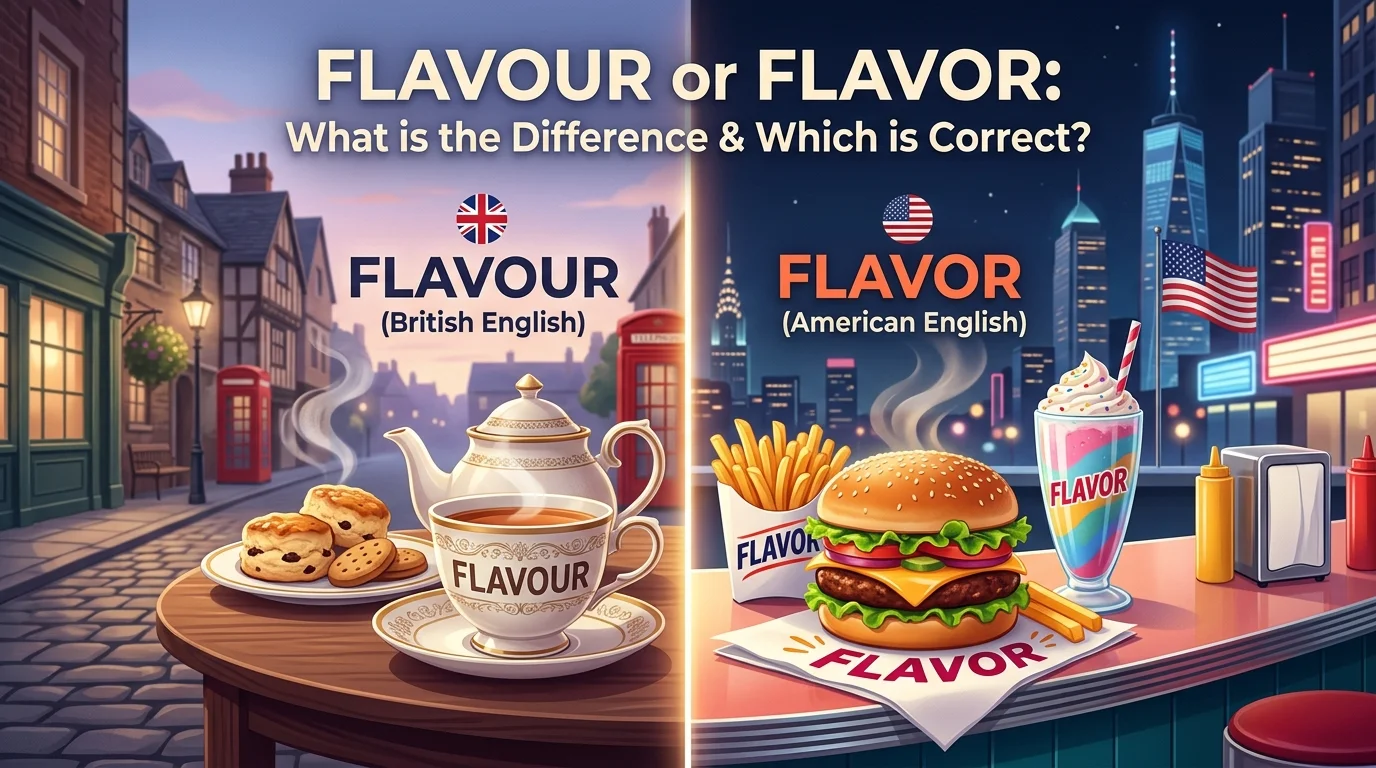
The words “flavour” and “flavor” often confuse writers, learners, and even native speakers because they look almost identical but are used differently in English. This comparison explains their meanings, usage, and regional differences so you can confidently choose the correct spelling in British and American English writing.
Comparison Overview
“Flavour” and “Flavor” refer to the same concept: the taste or distinctive quality of food, drinks, or even experiences. The only difference lies in spelling conventions between English varieties. “Flavour” is used in British English, while “Flavor” is standard in American English. Both are correct depending on context.
Definition of Flavour
Flavour is the British English spelling of the word used to describe the taste or sensory impression of food, drinks, or substances. It can also refer to a distinctive quality or character in non-food contexts, such as writing style or cultural atmosphere.
Definition of Flavor
Flavor is the American English spelling of the same word. It refers to the taste or distinctive quality of something, especially food and beverages. It is widely used in the United States and other regions that follow American English conventions.
Main Differences Between Flavour and Flavor
The key difference between these two words is spelling based on regional English usage.
| Aspect | Flavour | Flavor |
| English Type | British English | American English |
| Usage Region | UK, Australia, India (often) | USA, Latin America influence |
| Meaning | Taste or quality | Taste or quality |
| Correctness | Correct in British English | Correct in American English |
| Writing Style | More traditional spelling | Simplified spelling |
Both words carry the same meaning, and neither is more correct universally.
Grammar Guide
Both “flavour” and “flavor” function as nouns and sometimes as verbs depending on context. Their grammatical behavior is identical; only spelling changes.
How each term is used in sentences
Both forms are used to describe taste, aroma, or distinctive characteristics.
Examples:
- The soup has a rich flavour.
- The ice cream has a strong vanilla flavor.
- The writer added flavour to the story with humor.
- The sauce flavors the dish perfectly.
Common mistakes learners make
Many learners mix British and American spellings within the same document, which creates inconsistency. Another common mistake is assuming one spelling is incorrect, when both are valid in different contexts.
Simple rules to remember
- Use “flavour” for British English writing.
- Use “flavor” for American English writing.
- Stay consistent within one text.
Quick tips for writing and speaking
Choose one English standard based on your audience. If writing for global readers, pick American English unless otherwise specified. Always double-check consistency in formal writing.
When to Use Each One
Use “flavour” when writing for audiences in the UK, Australia, or regions that follow British English conventions. Use “flavor” when targeting American readers or publications that follow US English standards. In speech, pronunciation remains the same regardless of spelling.
When NOT to Use Each One
Do not mix both spellings in a single document. Avoid using “flavour” in American academic or professional writing unless quoting British sources. Similarly, avoid “flavor” in strictly British editorial contexts.
Which One to Use (Decision Guide)
If your audience is American, use “flavor.” If your audience is British or Commonwealth-based, use “flavour.” If unsure, choose one style guide and remain consistent throughout your writing. The meaning never changes, only the spelling system does.
Real-World Practical Examples
Flavour Examples
- The curry has an authentic Indian flavour.
- This tea has a mild floral flavour.
- The book adds a cultural flavour to history.
- The ice cream flavour is mango and coconut.
- The city has a unique artistic flavour.
Flavor Examples
- The pizza has a smoky flavor.
- Vanilla is the most popular ice cream flavor.
- The sauce enhances the flavor of the meat.
- This drink has a fruity flavor.
- The snack comes in multiple flavor options.
Self-Assessment (Fill in the Blanks)
- I prefer the British spelling ______ when writing for UK readers.
- The American spelling of flavour is ______.
- Ice cream ______ varies by brand and country.
- This dish has a strong spicy ______.
- The word ______ is used in British English.
- The word ______ is used in American English.
- Mango is a popular ice cream ______.
- The soup has a rich ______.
- Writers add ______ to make content more interesting.
- The sauce improves the ______ of the food.
- In the UK, people write ______ instead of flavor.
- In the US, people write ______ instead of flavour.
- The drink has a sweet ______.
- Different cultures add ______ to their cuisine.
- Chocolate is a common ice cream ______.
- The chef adjusted the ______ of the dish.
- British English prefers ______ spelling.
- American English prefers ______ spelling.
- The recipe depends on natural ______.
- The word refers to taste or ______ quality.
Answers
- Flavour
- Flavor
- Flavor
- Flavor
- Flavour
- Flavor
- Flavor
- Flavour
- Flavour
- Flavor
- Flavour
- Flavor
- Flavor
- Flavour
- Flavor
- Flavor
- Flavour
- Flavor
- Flavor
- Distinctive
Final Verdict
“Flavour” and “Flavor” mean exactly the same thing and differ only in spelling based on regional English usage. British English uses “flavour,” while American English uses “flavor.” The best choice depends on your audience and writing style guide. As long as you stay consistent, both forms are correct and widely accepted.
Conclusion About Flavour or Flavor
In conclusion, the difference between “flavour” and “flavor” is simple yet important for clear and correct writing. Both words carry the same meaning and describe the taste or distinctive quality of food, drinks, or experiences. The only distinction lies in regional English usage, where “flavour” is preferred in British English and “flavor” in American English. Understanding this small spelling variation helps you write more confidently, especially when tailoring content for different audiences. Whether you are writing recipes, academic content, or casual text, choosing the correct form ensures consistency and professionalism. In the end, both versions are correct, and your choice depends entirely on your audience and writing style.
FAQs
What is the difference between flavour and flavor?
Both words mean the same thing and describe taste or quality. The only difference is spelling, where “flavour” is British English and “flavor” is American English. The meaning does not change in any context, only regional writing conventions differ between the two styles.
Is flavour correct in American English?
No, “flavour” is not commonly used in American English. The preferred spelling in the United States is “flavor.” However, “flavour” may still appear in imported texts or British publications, but it is not standard in American writing.
Is flavor correct in British English?
In British English, the standard spelling is “flavour.” While “flavor” may be understood, it is considered American English and is generally avoided in formal British writing. Using “flavour” ensures proper alignment with UK language standards.
Why are there two spellings for the same word?
The two spellings exist because English evolved differently in the UK and the US. Over time, American English simplified many spellings, removing letters like “u” in words such as “flavour” becoming “flavor,” while British English retained traditional forms.
Do flavour and flavor have different meanings?
No, both words have identical meanings. They refer to the taste or sensory quality of food, drinks, or experiences. There is no difference in definition, usage, or grammar, only a variation in spelling based on regional English standards.
Which spelling should I use in writing?
Choose based on your audience. Use “flavour” for British, Australian, or Commonwealth readers, and “flavor” for American audiences. The most important rule is consistency throughout your writing to maintain clarity and professionalism.
Can flavour and flavor be used in scientific writing?
Yes, both are used in scientific contexts such as food science and chemistry. The spelling depends on the regional style guide being followed. American journals use “flavor,” while British publications prefer “flavour,” but the meaning remains the same.
Are flavour and flavor pronounced differently?
No, both words are pronounced the same way in spoken English. The difference exists only in spelling, not in pronunciation. Whether British or American English is used, the spoken form remains consistent and identical.
Is one spelling more correct than the other?
Neither spelling is more correct. Both are accepted in their respective forms of English. “Flavour” is correct in British English, and “flavor” is correct in American English. The choice depends entirely on regional usage and writing style.
Can I mix flavour and flavor in one document?
It is not recommended to mix both spellings in a single document. Doing so creates inconsistency and appears unprofessional. Always choose one form based on your target audience and apply it consistently throughout your writing.

Amelia Wright focuses on making figurative language easy to understand. Her writing explains similes, metaphors, and word meanings using relatable examples. She aims to help readers recognize subtle differences in usage and apply them correctly in both academic and casual writing.