
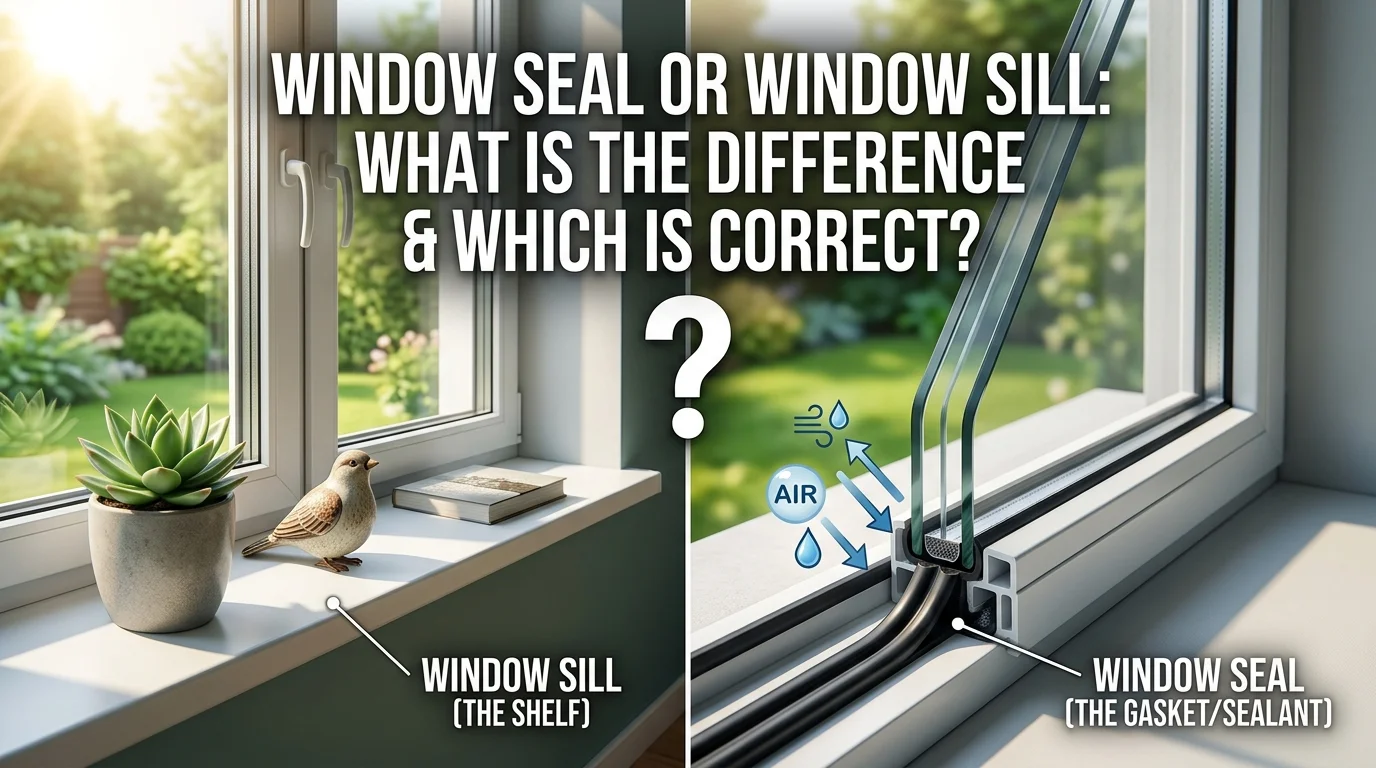
A window seal and a window sill are often confused because both are related to windows, but they serve completely different purposes. One is focused on preventing air and water leaks, while the other is a structural ledge at the base of a window. Understanding the difference helps in construction, repair, and everyday home maintenance.
Comparison Overview
Window seal and window sill are two essential parts of a window system, but they function in very different ways. A window seal is designed to close gaps and prevent drafts, moisture, and dust from entering. A window sill is the horizontal surface at the bottom of a window that supports the frame and often holds objects or directs water away from the wall.
Definition of Window Seal
A window seal is a material or component used to close gaps between window frames and glass or between the window and the wall. Its main purpose is insulation and protection. It helps prevent air leaks, water leakage, dust entry, and noise infiltration. Window seals are commonly made of rubber, silicone, foam, or weather stripping materials.
Definition of Window Sill
A window sill is the flat, horizontal ledge located at the bottom of a window frame. It is both a functional and architectural feature. It supports the window structure and helps direct rainwater away from the building wall. In many homes, window sills are also used for decoration, such as placing plants or small items.
Main Differences Between Window Seal and Window Sill
The window seal and window sill differ in purpose, location, and function. A window seal is mainly about insulation and preventing leaks, while a window sill is about structure and water drainage. The seal is usually hidden within the frame, whereas the sill is visible and often extends slightly into the room or outside.
A window seal uses flexible materials, while a window sill is made of rigid materials like wood, stone, concrete, or metal. One focuses on energy efficiency, the other focuses on physical support and design.
Comparison Table
| Feature | Window Seal | Window Sill |
| Purpose | Prevent leaks and drafts | Support and drainage |
| Location | Around window edges | Bottom of window frame |
| Material | Rubber, foam, silicone | Wood, stone, metal, concrete |
| Visibility | Usually hidden | Clearly visible |
| Function | Insulation | Structural and decorative |
Grammar Guide
Both terms are nouns used in the context of architecture and home construction. They are not interchangeable because they describe completely different parts of a window system.
How each term is used in sentences
Window Seal:
- The window seal prevents cold air from entering the room.
- We replaced the damaged window seal last winter.
- A strong window seal improves energy efficiency.
- The technician checked the window seal for leaks.
- Silicone is commonly used as a window seal material.
Window Sill:
- The cat sat on the window sill all afternoon.
- She placed flower pots on the window sill.
- Rainwater dripped off the window sill.
- The wooden window sill needs polishing.
- The design of the window sill matches the interior style.
Common mistakes learners make
Many learners confuse the two terms and assume they refer to the same part of a window. Another common mistake is using “seal” when referring to the bottom ledge of a window. Some also incorrectly use “sill” when talking about insulation or leakage issues.
Simple rules to remember
If it blocks air, water, or dust, it is a window seal. If it is a ledge or surface at the bottom of a window, it is a window sill. One is protective, the other is structural.
Quick tips for writing and speaking
Always think about function first, not appearance. If you are talking about energy efficiency or leaks, use window seal. If you are talking about placement, structure, or decoration, use window sill.
When to Use Each One
Use window seal when discussing insulation, energy saving, repairs, or weatherproofing. Use window sill when talking about architecture, interior design, construction, or household decoration. In building maintenance, both are often mentioned together but in different contexts.
When NOT to Use Each One
Do not use window seal when referring to a physical ledge or shelf-like surface under a window. Do not use window sill when describing gaps, leaks, or sealing materials. Mixing them can cause confusion in technical and everyday communication.
Which One to Use (Decision Guide)
If your focus is stopping air, water, or dust, choose window seal. If your focus is a physical surface or structural part of the window, choose window sill. Think function for seal and structure for sill. This simple distinction makes choosing the correct term easy.
Real-World Practical Examples
Window Seal Examples
- The window seal was replaced to stop cold air from entering the room.
- Builders applied a silicone window seal during installation.
- A broken window seal can increase electricity bills.
- The inspector checked the window seal for moisture damage.
- Modern homes use advanced window seal technology for insulation.
Window Sill Examples
- The window sill was made of polished marble.
- Plants were arranged neatly on the window sill.
- Water collected on the window sill after heavy rain.
- The carpenter repaired the damaged window sill.
- Children often sit near the window sill to read books.
Self-Assessment (Fill in the Blanks)
- I will use ______ when stopping air from entering through windows.
- The correct word is ______ because it refers to insulation.
- I will use ______ when talking about a bottom window ledge.
- The correct word is ______ because it is structural.
- ______ is used to block drafts and leaks.
- ______ is often made of wood or stone.
- A broken ______ can cause energy loss.
- A decorative item is placed on the ______.
- ______ improves insulation in homes.
- ______ supports the window frame.
- The technician repaired the ______ after leakage.
- Flowers were kept on the ______.
- A damaged ______ allows air to pass through.
- The marble ______ looks elegant.
- Silicone is used for ______ applications.
- The cat jumped onto the ______.
- A good ______ reduces noise from outside.
- The wooden ______ needs polishing.
- Builders inspected the ______ for gaps.
- The interior design includes a wide ______.
Answers
- window seal
- window seal
- window sill
- window sill
- window seal
- window sill
- window seal
- window sill
- window seal
- window sill
- window seal
- window sill
- window seal
- window sill
- window seal
- window sill
- window seal
- window sill
- window seal
- window sill
Final Verdict
Window seal and window sill may sound similar, but they serve completely different roles in a building. The window seal is focused on protection, insulation, and preventing leaks, while the window sill is a visible structural ledge used for support and design. Understanding this difference ensures correct usage in writing, construction, and everyday communication.
Conclusion About Window Seal or Window Sill
Understanding the difference between a window seal and a window sill makes a big impact on how you view home construction and maintenance. A window seal is essential for keeping your home energy efficient by blocking air, moisture, and dust from entering through gaps. On the other hand, a window sill provides structural support at the base of the window and adds both functional and decorative value to a room. While one works behind the scenes to protect your indoor environment, the other is clearly visible and often used for design or utility purposes. Knowing when and how to use each term helps avoid confusion in writing, communication, and practical home improvement tasks. Whether you are repairing, building, or simply learning, recognizing their unique roles ensures better understanding and smarter decisions for any window related project.
FAQs About Window Seal or Window Sill
What is the main difference between a window seal and a window sill?
A window seal is used to block air, water, and dust from entering through gaps in a window, while a window sill is the flat surface at the bottom of the window. One focuses on insulation and protection, while the other provides structural support and often serves decorative purposes in homes.
Why is a window seal important in a house?
A window seal is important because it improves energy efficiency by preventing drafts and leaks. It helps maintain indoor temperature, reduces energy bills, and keeps out moisture, dust, and noise. Without a proper seal, homes can lose comfort and become less efficient in both heating and cooling systems.
What materials are used for window seals?
Window seals are commonly made from flexible materials such as rubber, silicone, foam, or weather stripping. These materials are chosen because they can tightly fill gaps around windows and adjust to movement, ensuring long lasting protection against air and water leakage in different weather conditions.
What materials are used for window sills?
Window sills are usually made from durable materials like wood, stone, marble, concrete, or metal. These materials are strong enough to support weight and resist weather exposure. They also add aesthetic value to windows, making them an important part of both interior and exterior design.
Can a damaged window seal affect energy bills?
Yes, a damaged window seal can significantly increase energy bills. When air leaks through gaps, heating or cooling systems must work harder to maintain indoor temperature. This leads to higher energy consumption, reduced efficiency, and uncomfortable indoor conditions throughout the year.
Is a window sill necessary for every window?
Yes, a window sill is generally necessary because it helps support the window structure and directs rainwater away from the wall. It also prevents water damage and adds stability. In addition, it enhances the appearance of windows in both residential and commercial buildings.
How do I know if my window seal is damaged?
Signs of a damaged window seal include drafts near windows, visible gaps, condensation between panes, or increased noise from outside. You may also notice rising energy bills. These indicators suggest the seal is no longer effective and may need repair or replacement.
Can I repair a window sill myself?
Minor window sill repairs like repainting or filling small cracks can be done at home. However, serious damage such as rot, structural weakening, or water damage may require professional repair. Proper assessment is important to ensure safety and long term durability.
Do window seals reduce noise from outside?
Yes, a good window seal helps reduce outside noise by closing gaps that allow sound to pass through. While it does not completely block all noise, it significantly improves sound insulation, making indoor spaces quieter and more comfortable.
Why do people confuse window seal and window sill?
People often confuse them because both are related to windows and sound similar in name. However, they serve completely different purposes. One is for sealing gaps and insulation, while the other is a structural ledge at the bottom of the window frame.

Sophia Turner is a grammar-focused writer who covers similes, word-versus-word meanings, and correct English usage. Her content is designed for learners who want quick answers, logical explanations, and practical guidance for improving writing accuracy and style.