
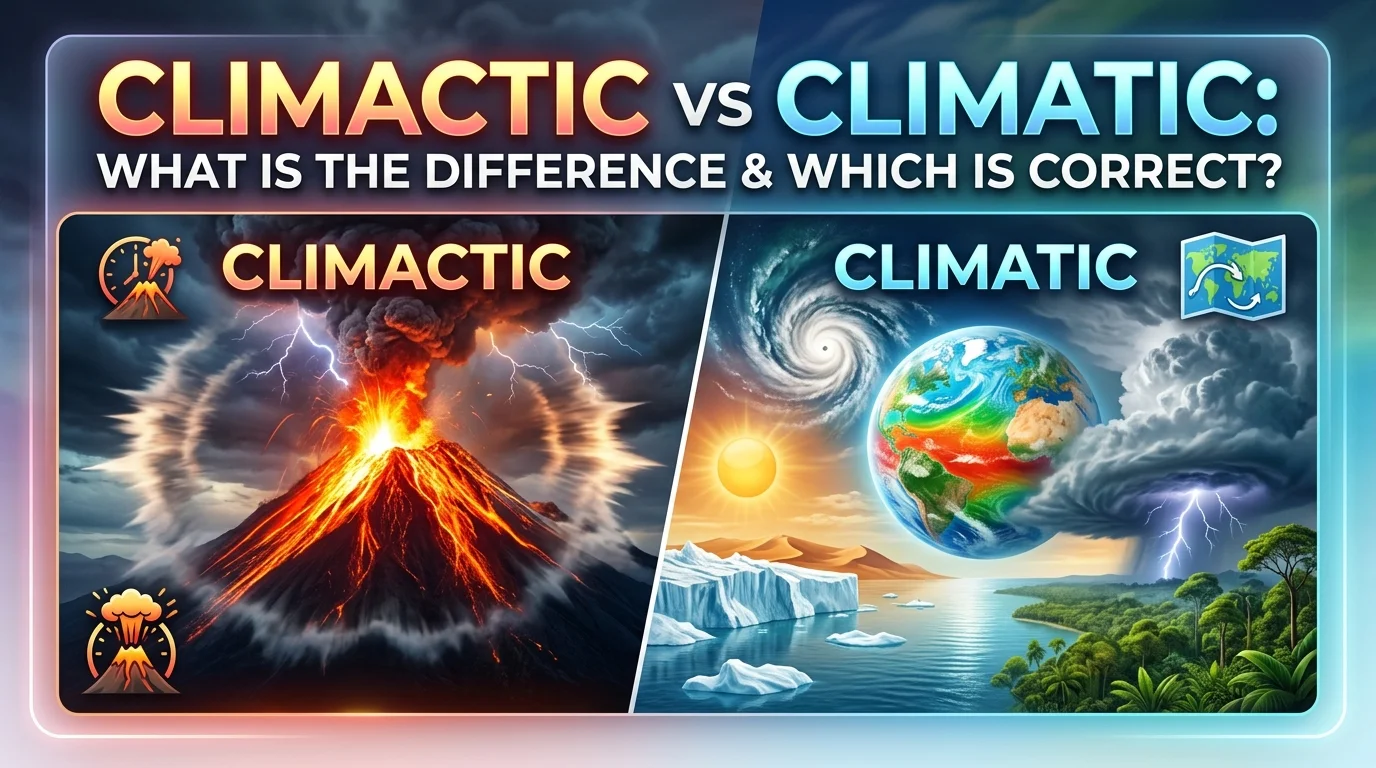
Many English learners confuse climactic and climatic because the words look and sound very similar. However, they have completely different meanings and are used in different situations. Understanding the difference between climactic and climatic can help you avoid common writing mistakes and improve your grammar, vocabulary, and communication skills.
Comparison Overview
The words climactic and climatic are often mixed up because they differ by only one letter. Despite their similar appearance, they belong to different contexts.
Climactic relates to a climax, peak, or most exciting moment in a sequence of events.
Climatic relates to climate, weather conditions, and environmental patterns.
Knowing which word to use depends entirely on whether you are discussing an important turning point or weather-related conditions.
| Feature | Climactic | Climatic |
| Related To | Climax | Climate |
| Meaning | Most exciting or important point | Weather and environmental conditions |
| Common Contexts | Stories, events, speeches, movies | Geography, weather, science |
| Part of Speech | Adjective | Adjective |
| Example | The climactic battle ended the movie. | Climatic changes affect agriculture. |
Definition of Climactic
Climactic is an adjective that describes something connected to a climax, which is the highest, most intense, or most important point in a series of events.
It is commonly used in literature, movies, storytelling, speeches, sports, and dramatic situations.
Examples:
- The climactic scene made the audience cheer.
- The climactic moment arrived during the final match.
- The book’s climactic ending surprised readers.
Definition of Climatic
Climatic is an adjective that refers to climate or long-term weather conditions in a particular area.
It is often used in environmental science, geography, agriculture, and discussions about weather patterns.
Examples:
- Climatic conditions vary across regions.
- Scientists study climatic changes worldwide.
- The country’s climatic zones influence farming.
Main Differences Between Climactic and Climatic
Although the words are similar in spelling, their meanings are completely different.
| Aspect | Climactic | Climatic |
| Root Word | Climax | Climate |
| Focus | Peak event or turning point | Weather and environmental conditions |
| Usage Area | Literature, entertainment, speeches | Science, geography, environment |
| Emotional Meaning | Often dramatic or exciting | Usually factual and scientific |
| Example | A climactic confrontation | Climatic variations |
The easiest way to remember the difference is:
- Climactic = Climax
- Climatic = Climate
Common Contexts Where These Words Appear
Climactic Contexts
- Novels
- Movies
- Sports events
- Speeches
- Historical events
Climatic Contexts
- Weather reports
- Climate studies
- Environmental research
- Geography lessons
- Agricultural planning
Comparison Table with Examples
| Sentence | Correct Word |
| The final chapter contained a dramatic ending. | Climactic |
| Scientists observed long-term weather changes. | Climatic |
| The championship game reached a thrilling peak. | Climactic |
| The region experiences tropical conditions. | Climatic |
| The hero faced the villain in the final showdown. | Climactic |
| Climatic patterns affect crop production. | Climatic |
Grammar Guide
Both climactic and climatic are adjectives, but they modify different kinds of nouns.
How Each Term Is Used in Sentences
Climactic
Pattern:
- Climactic + event
- Climactic + moment
- Climactic + scene
Examples:
- The climactic battle lasted an hour.
- We finally reached the climactic moment.
Climatic
Pattern:
- Climatic + conditions
- Climatic + factors
- Climatic + changes
Examples:
- Climatic conditions influence ecosystems.
- Climatic changes affect temperatures.
Common Mistakes Learners Make
Many learners accidentally substitute one word for the other because of their similar spelling.
Incorrect:
- The climactic conditions were favorable for farming.
Correct:
- The climatic conditions were favorable for farming.
Incorrect:
- The climatic scene was exciting.
Correct:
- The climactic scene was exciting.
Simple Rules to Remember
- If the topic involves a peak or turning point, use climactic.
- If the topic involves weather or climate, use climatic.
- Think of the shared root word:
- Climactic → Climax
- Climatic → Climate
Quick Tips for Writing and Speaking
- Check whether you are discussing excitement or weather.
- Replace the word with its root form to test correctness.
- Proofread carefully because spell-checkers may not catch the mistake.
When to Use Each One
Use climactic when discussing:
- A dramatic ending
- An important event
- A peak moment
- A final confrontation
- A turning point in a story
Use climatic when discussing:
- Weather patterns
- Climate zones
- Environmental studies
- Global warming
- Agricultural conditions
When NOT to Use Each One
Do not use climactic when talking about:
- Weather forecasts
- Environmental science
- Temperature trends
- Rainfall patterns
Do not use climatic when talking about:
- Movie endings
- Story climaxes
- Dramatic moments
- Exciting finales
Which One to Use (Decision Guide)
Ask yourself this question:
Am I talking about weather or climate?
- Yes → Use climatic
- No → Continue
Am I talking about a peak, climax, or important moment?
- Yes → Use climactic
- No → Recheck the context
Quick Formula:
- Peak event = Climactic
- Weather conditions = Climatic
Real-World Practical Examples
Climactic Examples
- The climactic battle determined the fate of the kingdom.
- The climactic speech inspired thousands of listeners.
- The climactic moment of the game came in the final minute.
- The climactic chapter revealed the mystery.
- The climactic debate changed public opinion.
Climatic Examples
- Climatic conditions affect crop yields.
- Scientists monitor climatic changes globally.
- The region’s climatic patterns support tourism.
- Climatic factors influence animal habitats.
- Researchers analyzed climatic data over decades.
Self-Assessment (Fill in the Blanks)
- I will use ______ when referring to weather patterns. The correct word is ______ because it relates to climate.
- I will use ______ when describing the most exciting scene in a movie. The correct word is ______ because it refers to a climax.
- I will use ______ when discussing environmental conditions. The correct word is ______ because it concerns climate.
- I will use ______ when describing a final showdown. The correct word is ______ because it refers to a peak event.
- I will use ______ when talking about temperature trends. The correct word is ______ because it relates to climate.
- I will use ______ when discussing the dramatic ending of a novel. The correct word is ______ because it refers to a climax.
- I will use ______ when discussing rainfall patterns. The correct word is ______ because it concerns weather conditions.
- I will use ______ when talking about a championship’s defining moment. The correct word is ______ because it describes a climax.
- I will use ______ when discussing global climate change. The correct word is ______ because it concerns climate.
- I will use ______ when describing a thrilling finale. The correct word is ______ because it refers to a climax.
- I will use ______ when discussing climate zones. The correct word is ______ because it relates to weather conditions.
- I will use ______ when talking about the most important scene in a play. The correct word is ______ because it refers to a climax.
- I will use ______ when discussing agricultural weather patterns. The correct word is ______ because it concerns climate.
- I will use ______ when describing the peak of a story. The correct word is ______ because it refers to a climax.
- I will use ______ when discussing environmental trends. The correct word is ______ because it concerns climate.
- I will use ______ when describing a dramatic conclusion. The correct word is ______ because it refers to a climax.
- I will use ______ when discussing long-term weather conditions. The correct word is ______ because it concerns climate.
- I will use ______ when describing the final turning point in a narrative. The correct word is ______ because it refers to a climax.
- I will use ______ when discussing climate research. The correct word is ______ because it concerns climate.
- I will use ______ when describing the most intense moment of an event. The correct word is ______ because it refers to a climax.
Answers
- Climatic
- Climactic
- Climatic
- Climactic
- Climatic
- Climactic
- Climatic
- Climactic
- Climatic
- Climactic
- Climatic
- Climactic
- Climatic
- Climactic
- Climatic
- Climactic
- Climatic
- Climactic
- Climatic
- Climactic
Final Verdict
The difference between climactic and climatic is simple once you understand their roots. Climactic comes from climax and refers to the most important, exciting, or dramatic point in a sequence of events. Climatic comes from climate and relates to weather conditions, environmental patterns, and long-term atmospheric trends. Because the words differ by only one letter, writers often confuse them, but remembering the connection between climactic = climax and climatic = climate makes choosing the correct word much easier. Whenever you write or speak, think about whether you’re discussing a dramatic peak or weather-related conditions. That quick check will help you use the right word confidently every time.
Conclusion About Climactic vs Climatic
Understanding the difference between climactic vs climatic is essential for clear and accurate communication. Although these two words look very similar, they belong to completely different contexts and should never be used interchangeably. Climactic refers to the most important, exciting, or intense point in a story, event, speech, or sequence of actions. Climatic, on the other hand, relates to climate, weather patterns, and environmental conditions. This small spelling difference can significantly change the meaning of a sentence.
When deciding which word to use, focus on the subject being discussed. If the topic involves a dramatic peak or turning point, choose climactic. If it concerns weather, geography, or environmental factors, choose climatic. By remembering the connection between climactic and climax and climatic and climate, you can avoid common mistakes and use both terms confidently in writing, speaking, academic work, and everyday communication.
FAQs
What is the difference between climactic and climatic?
The main difference is that climactic relates to a climax or the most exciting point of something, while climatic relates to climate and weather conditions. Although the words are similar in spelling, they have completely different meanings and uses.
Is climactic related to weather?
No, climactic is not related to weather. It refers to an important, dramatic, or exciting peak in a story, event, speech, or situation. Weather and environmental discussions require the word climatic instead.
Is climatic connected to climate?
Yes, climatic comes directly from the word climate. It describes weather patterns, environmental conditions, temperature trends, and other factors related to a region’s atmosphere and long-term weather characteristics.
Why do people confuse climactic and climatic?
People often confuse these words because they differ by only one letter and have similar pronunciations. However, their meanings are unrelated. Remembering the root words, climax and climate, helps distinguish them easily.
Can climactic describe a movie ending?
Yes, climactic is commonly used to describe movie endings, final battles, dramatic scenes, and important turning points. It highlights the most intense or significant moment in a sequence of events.
Can climatic describe environmental changes?
Yes, climatic is frequently used when discussing environmental changes, climate trends, weather systems, and scientific studies about atmospheric conditions affecting regions around the world.
Are climactic and climatic both adjectives?
Yes, both words function as adjectives. They modify nouns but describe different things. Climactic modifies events or moments, while climatic modifies conditions, factors, patterns, and environmental topics.
Which word should I use in a science report?
In most science reports dealing with weather, geography, agriculture, or environmental studies, climatic is usually the correct choice. Climactic would only be appropriate if discussing a peak or critical moment.
How can I remember the difference between climactic and climatic?
A simple memory trick is to connect climactic with climax and climatic with climate. If you can replace the word with climax, use climactic. If you can replace it with climate, use climatic.
Is using climactic instead of climatic considered a grammar mistake?
Yes, using one in place of the other is considered a word-choice error because it changes the intended meaning of the sentence. Careful proofreading can help prevent this common vocabulary mistake.
Meta Description: Climactic vs Climatic explained clearly. Learn how climactic means a peak moment while climatic relates to climate and weather.
Conclusion About Climactic vs Climatic
Understanding the difference between climactic vs climatic is essential for clear and accurate communication. Although these two words look very similar, they belong to completely different contexts and should never be used interchangeably. Climactic refers to the most important, exciting, or intense point in a story, event, speech, or sequence of actions. Climatic, on the other hand, relates to climate, weather patterns, and environmental conditions. This small spelling difference can significantly change the meaning of a sentence.
When deciding which word to use, focus on the subject being discussed. If the topic involves a dramatic peak or turning point, choose climactic. If it concerns weather, geography, or environmental factors, choose climatic. By remembering the connection between climactic and climax and climatic and climate, you can avoid common mistakes and use both terms confidently in writing, speaking, academic work, and everyday communication.
FAQs
What is the difference between climactic and climatic?
The main difference is that climactic relates to a climax or the most exciting point of something, while climatic relates to climate and weather conditions. Although the words are similar in spelling, they have completely different meanings and uses.
Is climactic related to weather?
No, climactic is not related to weather. It refers to an important, dramatic, or exciting peak in a story, event, speech, or situation. Weather and environmental discussions require the word climatic instead.
Is climatic connected to climate?
Yes, climatic comes directly from the word climate. It describes weather patterns, environmental conditions, temperature trends, and other factors related to a region’s atmosphere and long-term weather characteristics.
Why do people confuse climactic and climatic?
People often confuse these words because they differ by only one letter and have similar pronunciations. However, their meanings are unrelated. Remembering the root words, climax and climate, helps distinguish them easily.
Can climactic describe a movie ending?
Yes, climactic is commonly used to describe movie endings, final battles, dramatic scenes, and important turning points. It highlights the most intense or significant moment in a sequence of events.
Can climatic describe environmental changes?
Yes, climatic is frequently used when discussing environmental changes, climate trends, weather systems, and scientific studies about atmospheric conditions affecting regions around the world.
Are climactic and climatic both adjectives?
Yes, both words function as adjectives. They modify nouns but describe different things. Climactic modifies events or moments, while climatic modifies conditions, factors, patterns, and environmental topics.
Which word should I use in a science report?
In most science reports dealing with weather, geography, agriculture, or environmental studies, climatic is usually the correct choice. Climactic would only be appropriate if discussing a peak or critical moment.
How can I remember the difference between climactic and climatic?
A simple memory trick is to connect climactic with climax and climatic with climate. If you can replace the word with climax, use climactic. If you can replace it with climate, use climatic.
Is using climactic instead of climatic considered a grammar mistake?
Yes, using one in place of the other is considered a word-choice error because it changes the intended meaning of the sentence. Careful proofreading can help prevent this common vocabulary mistake.

Daniel Brooks is an English educator with a passion for explaining similes and word comparisons in plain language. He covers topics like versus meanings, correct usage, and figurative language to help writers avoid common mistakes and improve clarity in everyday writing.