
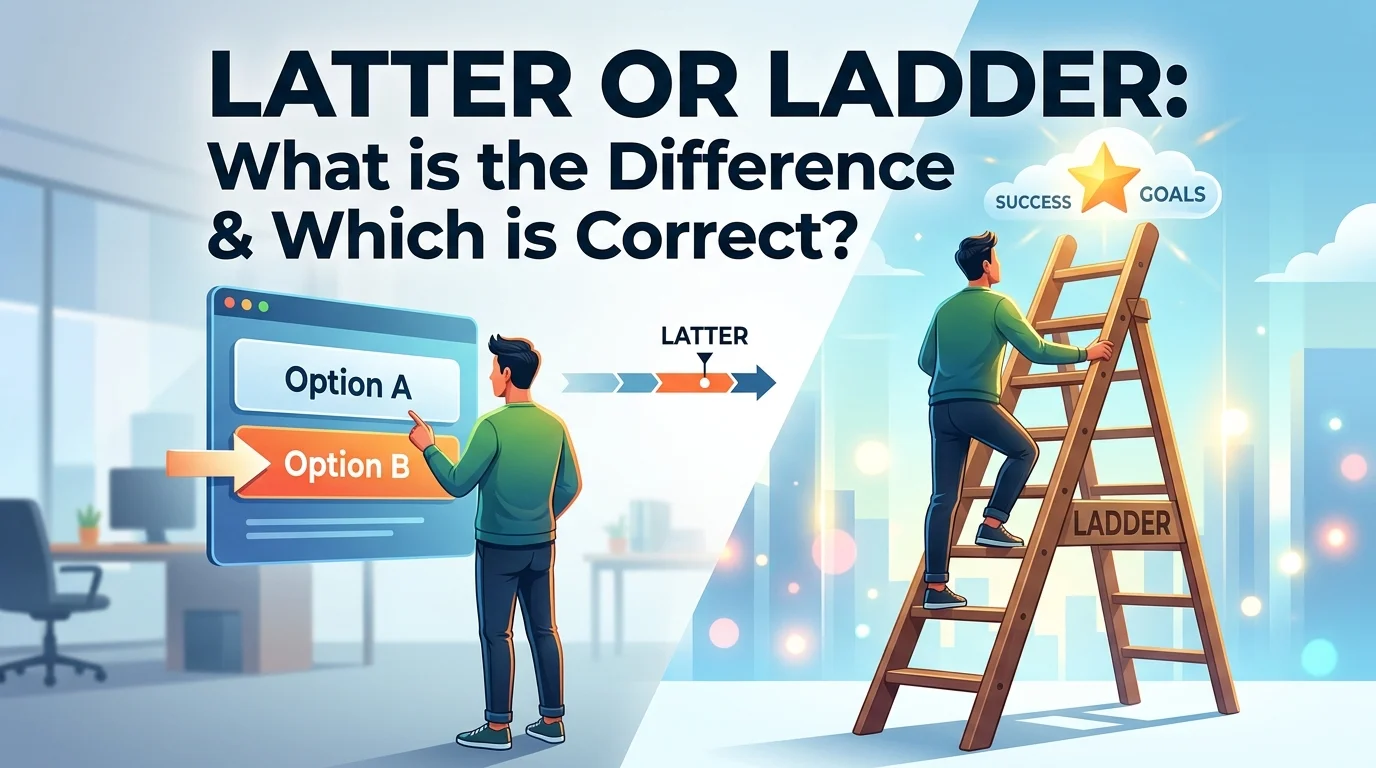
Many English learners get confused between “latter” and “ladder” because they sound similar but have completely different meanings. One refers to order or choice in writing, while the other is a physical object used for climbing. Understanding the difference is important for clear communication and avoiding common spelling mistakes.
Comparison Overview
“Latter” and “ladder” are often mixed up due to pronunciation, but they belong to entirely different categories of English usage. “Latter” is used in grammar and writing to refer to the second of two mentioned things, while “ladder” is a noun describing a tool used for climbing. Knowing how each works helps improve both writing accuracy and speaking clarity.
Definition of Latter
“Latter” is an adjective used in English to refer to the second of two people or things that have already been mentioned. It is commonly used in formal writing, comparisons, and structured sentences.
In simple terms, “latter” helps you point to the second option in a pair without repeating the full name.
Definition of Ladder
“Ladder” is a noun that refers to a piece of equipment made of steps or rungs between two vertical bars. It is used for climbing up or down, such as reaching high places like roofs, shelves, or trees.
It is a physical object and has nothing to do with grammar or sentence structure.
Main Differences Between Latter and Ladder
The key difference is meaning and usage. “Latter” is abstract and grammatical, while “ladder” is concrete and physical.
“Latter” is used in writing or speech to refer to the second of two previously mentioned items. For example, if someone says tea and coffee, and then refers to the latter, they mean coffee.
“Ladder” is used in everyday life to describe an object used for climbing. It can be made of wood, metal, or fiberglass and is commonly used in construction, cleaning, and maintenance work.
Another important difference is spelling. “Latter” contains double “t” while “ladder” contains double “d,” which often causes confusion for learners.
Grammar Guide
How each term is used in sentences
“Latter” is used in comparative structures involving two items:
- I like tea and coffee, but the latter is my favorite.
- Between math and science, the latter is more difficult.
“Ladder” is used as a noun:
- He climbed the ladder to fix the roof.
- The ladder is in the garage.
Common mistakes learners make
One common mistake is using “ladder” when “latter” is needed in writing. For example, writing “the ladder option” instead of “the latter option.”
Another mistake is spelling confusion, especially in fast writing or typing.
Simple rules to remember
If you are talking about writing, comparison, or choosing between two things, use “latter.”
If you are talking about a physical object used for climbing, use “ladder.”
Quick tips for writing and speaking
Think of “latter” as linked to letters and language, which helps with memory and writing contexts. Think of “ladder” as something you physically climb step by step.
When to Use Each One
Use “latter” when referring to the second of two items mentioned earlier in a sentence or discussion. It is common in essays, reports, and formal communication.
Use “ladder” when talking about physical activities involving climbing or reaching high places. It is common in daily conversation, workplace instructions, and safety guidelines.
When NOT to Use Each One
Do not use “latter” when referring to physical objects. It does not describe anything you can touch or use.
Do not use “ladder” in writing comparisons or when selecting between two ideas. It cannot replace grammatical reference words.
Which One to Use (Decision Guide)
If your sentence involves comparison or referencing the second of two items, choose “latter.” If your sentence involves a physical object used for climbing, choose “ladder.” A simple check is whether you can physically interact with the thing. If yes, it is “ladder.” If not and it refers to writing or order, it is “latter.”
Real-World Practical Examples
Latter Examples
- I had rice and bread for lunch, but I preferred the latter.
- She offered history and geography as subjects, and I chose the latter.
- Between reading and watching TV, the latter is more relaxing for him.
- He mentioned work and travel plans, and the latter is still uncertain.
- Coffee and tea were served, but I did not like the latter.
Ladder Examples
- The firefighter used a ladder to rescue the cat.
- He climbed a ladder to paint the ceiling.
- We need a ladder to reach the top shelf.
- The ladder slipped while he was working on the roof.
- She bought a new ladder for home repairs.
Self-Assessment (Fill in the Blanks)
I will use ______ when referring to the second of two items mentioned.
The correct word is ______ because it describes a climbing tool.
Between apples and oranges, the ______ is sweeter.
He climbed the ______ to fix the light bulb.
I prefer tea and coffee, but the ______ is stronger.
A ______ is required to reach high places safely.
The ______ option was more expensive.
He carried a ______ to clean the windows.
In writing, ______ is used for comparison.
Workers used a ______ on the construction site.
She chose the ______ after comparing both options.
A broken ______ can be dangerous.
The ______ refers to the second choice in a pair.
You should always secure the ______ before climbing.
Between cats and dogs, the ______ is more independent.
He leaned a ______ against the wall.
The ______ part of the sentence refers to the second item.
Without a ______, you cannot reach the roof safely.
I selected the ______ because it suited my needs better.
A wooden ______ was used in the garden.
Answers
- latter
- ladder
- latter
- ladder
- latter
- ladder
- latter
- ladder
- latter
- ladder
- latter
- ladder
- latter
- ladder
- latter
- ladder
- latter
- ladder
- latter
- ladder
Final Verdict
“Latter” and “ladder” may sound similar, but they are used in completely different ways. “Latter” belongs to grammar and helps refer to the second of two mentioned items in writing or speech. “Ladder” is a physical object used for climbing and has practical real-world use. The easiest way to avoid confusion is to check whether you are talking about language and comparison or a physical object. With practice, using the correct term becomes natural and error-free.
Conclusion About Latter or Ladder
Understanding the difference between latter or ladder helps you avoid one of the most common English mistakes caused by similar sounding words. While latter is used in writing to refer to the second of two previously mentioned things, ladder is a physical object used for climbing. Mixing them can change meaning completely and create confusion in both speaking and writing. By remembering that latter belongs to grammar and comparison, and ladder belongs to real world objects, you can use them correctly with confidence. Practicing with simple sentences and real life examples makes the distinction even clearer over time. Whether you are writing essays, speaking in conversations, or improving your vocabulary, mastering this difference improves clarity and accuracy. With consistent use, you will naturally choose the right word without hesitation, making your English more polished and professional.
FAQs
What is the main difference between latter or ladder?
The main difference is meaning and usage. Latter is used in grammar to refer to the second of two mentioned items, while ladder is a physical object used for climbing. One is abstract and related to language structure, while the other is concrete and used in everyday life activities like construction or reaching high places.
When should I use latter in a sentence?
You should use latter when referring to the second of two previously mentioned things. It is commonly used in writing, essays, and comparisons. For example, when choosing between two options, you use latter to avoid repeating the full word again, making sentences shorter, clearer, and more natural in formal communication.
What does ladder mean in daily use?
In daily use, ladder refers to a tool made of steps or rungs used for climbing. People use it to reach high places such as roofs, shelves, or trees. It is a physical object found in homes, construction sites, and workplaces where elevation or height access is needed safely.
Why do people confuse latter or ladder?
People confuse them because they sound similar when spoken, especially in fast conversation. However, their spelling and meaning are completely different. Latter is related to grammar and comparison, while ladder is a physical object. This similarity in pronunciation often leads to spelling mistakes among learners and even native speakers.
Is latter used in spoken English?
Yes, latter is used in spoken English but mostly in formal or structured conversations. It helps avoid repeating previously mentioned words. In casual speech, people may instead repeat the actual noun, but in presentations, discussions, and professional settings, latter is useful for clarity and smoother communication.
Can ladder be used in grammar context?
No, ladder cannot be used in grammar or sentence comparison contexts. It only refers to a physical object used for climbing. Using ladder in place of grammatical terms would make the sentence incorrect and confusing. It should always be used when talking about real objects, not language structure.
What is an easy way to remember the difference?
A simple way is to connect latter with language and comparison since it is used in writing. Ladder can be remembered as something you physically climb. Thinking of ladder having steps helps you associate it with physical movement, while latter stays in the mental or written context.
Are latter and ladder pronounced the same?
They sound very similar but not exactly the same. Latter has a softer ending related to grammar usage, while ladder has a stronger “d” sound. Despite the slight difference in pronunciation, many speakers still confuse them, especially in quick speech or informal conversations.
Can using wrong word change meaning?
Yes, using the wrong word can completely change the meaning of a sentence. Replacing latter with ladder or vice versa can make writing confusing or incorrect. In formal writing, this mistake can affect clarity and make communication less professional, so choosing the correct word is important.
What are examples of latter or ladder in sentences?
For latter: I had tea and coffee, but I preferred the latter. For ladder: He climbed a ladder to fix the roof. These examples show the clear difference, where latter refers to choice or order, while ladder refers to a physical object used for climbing.

Sarah Mitchell is an experienced writer and grammar teacher with over 10 years of expertise in English language education. She helps learners improve their grammar, writing, and communication skills through clear explanations and practical examples. Sarah creates learner-friendly content focused on real-life English, making language learning simple, effective, and confidence-building.