
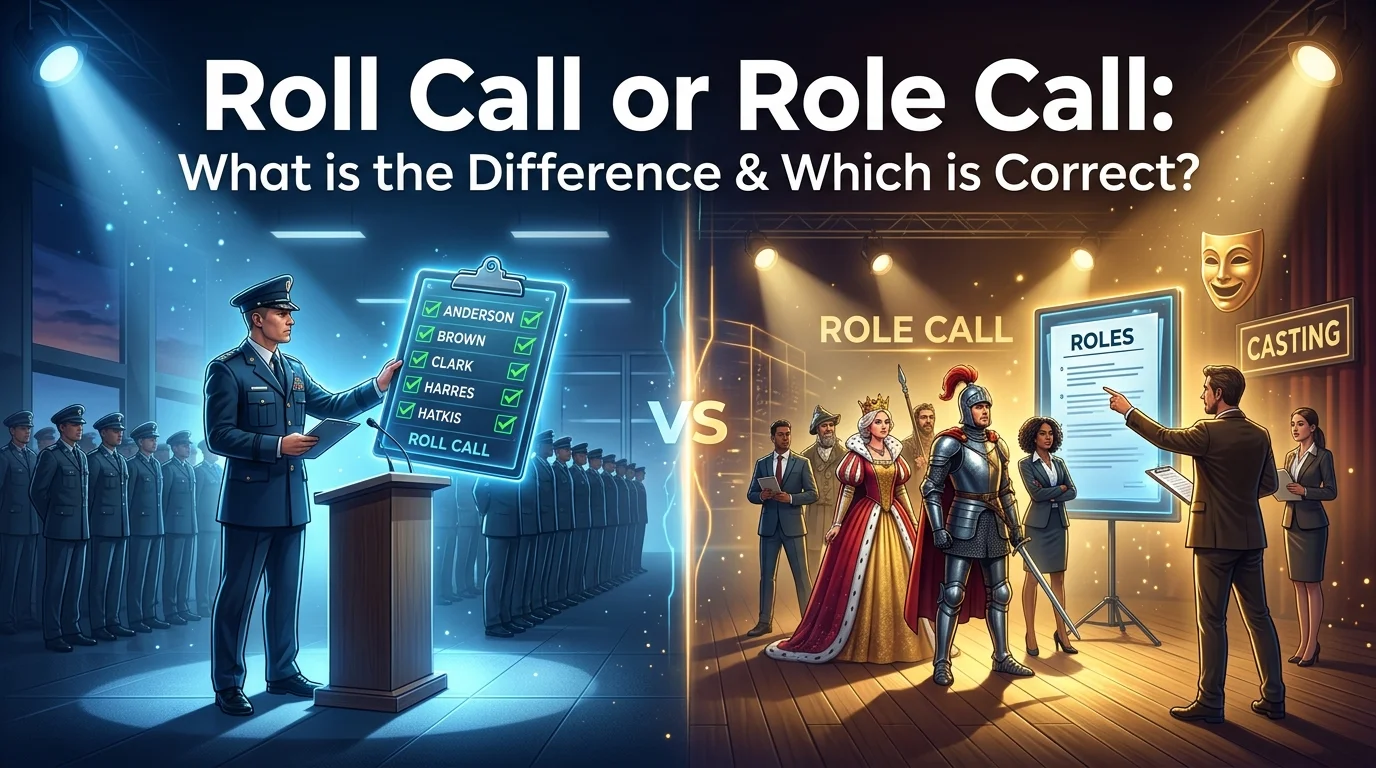
Roll Call or Role Call is a common spelling confusion in English that often leads to mistakes in writing and speaking. Many people mix these terms because they sound the same, but only one is correct in most contexts. This guide explains the meaning, usage, and differences so you can confidently choose the right form every time.
Comparison Overview
The confusion between roll call and role call comes from pronunciation similarity, but they are not interchangeable. Roll call is the standard and correct term used in education, military, and formal attendance checks. Role call is generally a misspelling or misunderstanding influenced by the word “role,” which has a completely different meaning related to functions or characters.
Definition of Roll Call
Roll call is a formal process of checking attendance by calling out names from a list. It is commonly used in classrooms, military settings, meetings, and official gatherings to confirm who is present. The term comes from the practice of reading a “roll” or list of names.
Definition of Role Call
Role call is not a standard English term in grammar or formal usage. It is usually an incorrect spelling that happens when people confuse it with “roll call.” The word “role” refers to a function or part someone plays, such as in acting or responsibilities, but it does not relate to attendance checking.
Main Differences Between Roll Call and Role Call
The main difference lies in meaning and correctness. Roll call refers to attendance verification, while role call is a mistaken version influenced by the word role.
Roll call is widely accepted in education, military, and administrative settings. Role call has no official usage in standard English grammar. One is a functional term used daily, while the other is an error that should be avoided.
Key Differences Table
| Feature | Roll Call | Role Call |
| Meaning | Attendance check | Incorrect spelling |
| Usage | Formal and standard | Not standard |
| Context | Schools, military, meetings | Rarely correct |
| Status | Correct term | Common mistake |
Grammar Guide
Roll call functions as a noun phrase. It refers to the act of calling names from a list to check attendance. Role call is grammatically incorrect in this context because “role” refers to duties or positions, not attendance lists.
How each term is used in sentences
Roll call is used when referring to attendance verification activities.
Examples:
The teacher began roll call at the start of class.
Roll call is mandatory in military training.
We had roll call before the meeting started.
Role call is not used in correct grammatical structures for attendance checking.
Common mistakes learners make
Many learners write “role call” instead of “roll call” due to pronunciation similarity. Another mistake is assuming both words are interchangeable because they sound identical when spoken.
Simple rules to remember
Remember that roll call includes “roll” like a list or register. Think of rolling through names one by one. Role relates to jobs or characters, not attendance.
Quick tips for writing and speaking
Always connect roll call with attendance or listing names. If the context involves duties or positions, use role instead. This mental separation helps avoid confusion.
When to Use Each One
Use roll call when referring to attendance checks in schools, offices, military drills, or formal gatherings. It is the correct and accepted term in all professional contexts.
Role should only be used when discussing responsibilities, functions, or acting parts, not attendance.
When NOT to Use Each One
Do not use role call in place of roll call when talking about attendance. This is a spelling error.
Also avoid using roll call when discussing job functions or responsibilities, as that requires the word role, not roll.
Which One to Use (Decision Guide)
If you are talking about checking attendance, use roll call. If you are referring to responsibilities or positions, use role. When in doubt about attendance, always choose roll call because it is the correct grammatical term.
Real-World Practical Examples
Roll Call Examples
The teacher conducted roll call before starting the lesson.
Military personnel stand in formation during roll call.
Roll call is taken every morning in school.
The meeting started after roll call was completed.
Attendance was confirmed through roll call in the office.
Role Call Examples
Role call is not a correct term in standard English.
Many students mistakenly write role call instead of roll call.
There are no formal usage examples for role call in grammar.
Writers often correct role call to roll call in editing.
Search results may show role call due to spelling errors.
Self-Assessment (Fill in the Blanks)
I will use ______ when referring to attendance checking in class.
The correct word is ______ because it involves reading names from a list.
______ is the proper term used in military attendance.
The word ______ is incorrect in grammar for attendance.
Teachers take ______ every morning before lessons begin.
The mistake happens when people write ______ instead of roll call.
______ refers to roles or responsibilities, not attendance.
We start the meeting after ______ is completed.
Students often confuse roll call with ______.
The correct spelling for attendance check is ______.
______ is used in schools and offices for presence checking.
Writing ______ is considered a spelling error.
The term ______ is widely accepted in formal English.
______ should never replace roll call in attendance context.
During ______, names are called one by one.
The incorrect form ______ appears due to pronunciation confusion.
______ is not used in official grammar rules.
The teacher began ______ after everyone settled.
______ is the correct noun phrase for attendance.
Avoid using ______ in formal writing.
Answers
- roll call
- roll call
- roll call
- role call
- roll call
- role call
- role
- roll call
- role call
- roll call
- roll call
- role call
- roll call
- role call
- roll call
- role call
- role call
- roll call
- roll call
- role call
Final Verdict
The correct and standard term is roll call, which is used for checking attendance in schools, offices, and formal settings. Role call is a common spelling mistake caused by confusion with the word role. To write accurately and professionally, always use roll call when referring to attendance verification and avoid the incorrect form in all contexts.
Conclusion About Roll Call or Role Call
Understanding the difference between roll call and role call makes English much clearer and easier to use correctly in daily communication. Roll call is the standard term used for checking attendance in schools, workplaces, and formal settings, while role call is simply a common spelling mistake caused by confusion between two similar sounding words. Knowing this difference helps improve writing accuracy, prevents misunderstandings, and builds stronger language skills. Whether you are a student, teacher, or professional, using roll call correctly shows attention to detail and confidence in communication. The key idea is simple: roll call is always about calling names from a list, while role relates to duties or positions. Keeping this in mind ensures you avoid one of the most frequent English errors and express yourself more clearly in both writing and speech.
FAQs
What is roll call?
Roll call is a method used to check attendance by calling out names from a list. It is widely used in schools, offices, and military settings. Each person responds when their name is called, helping confirm presence in an organized and structured way before activities begin.
Is role call correct spelling?
Role call is not correct when referring to attendance checking. It is a common spelling mistake caused by mixing up similar sounding words. The correct term is roll call, which is used in formal and educational contexts to verify who is present in a group.
Why is roll call used?
Roll call is used to ensure everyone is present before starting an activity or meeting. It helps maintain order and accountability in classrooms, offices, and training environments. By calling names one by one, it provides a simple and reliable way to track attendance.
Where is roll call used?
Roll call is commonly used in schools, military training, workplaces, and official meetings. It is especially helpful in structured environments where attendance must be recorded accurately. This method ensures that all participants are accounted for before any formal process begins.
What does role mean?
Role refers to a function, responsibility, or position someone holds in a specific situation. For example, a teacher has a teaching role, and an actor plays a role in a film. It is unrelated to attendance checking and should not be confused with roll call.
Can role call be used?
Role call should not be used for attendance checking because it is grammatically incorrect in standard English. The correct term is roll call. However, the word role is still valid when discussing duties or responsibilities in different contexts.
Difference between roll and role?
Roll refers to a list used for attendance or something that moves in a rolling motion. Role refers to a duty, responsibility, or position. Although they sound the same, their meanings are completely different, which is why only roll is correct in roll call.
How to remember correct spelling?
To remember the correct spelling, link roll call with a list that rolls through names one by one. Since attendance involves reading names from a register, roll fits naturally. Role belongs to responsibilities, so it should not be used in attendance contexts.
Is roll call formal?
Yes, roll call is a formal method of attendance checking used in schools, military, offices, and official meetings. It ensures accurate tracking of participants and is still widely used even with modern digital systems in place for attendance recording.
Common mistakes in roll call usage?
The most common mistake is writing role call instead of roll call due to similar pronunciation. Another mistake is using roll call outside attendance contexts. Understanding the meaning of each word helps avoid errors and improves overall writing accuracy.

Daniel Brooks is an English educator with a passion for explaining similes and word comparisons in plain language. He covers topics like versus meanings, correct usage, and figurative language to help writers avoid common mistakes and improve clarity in everyday writing.