
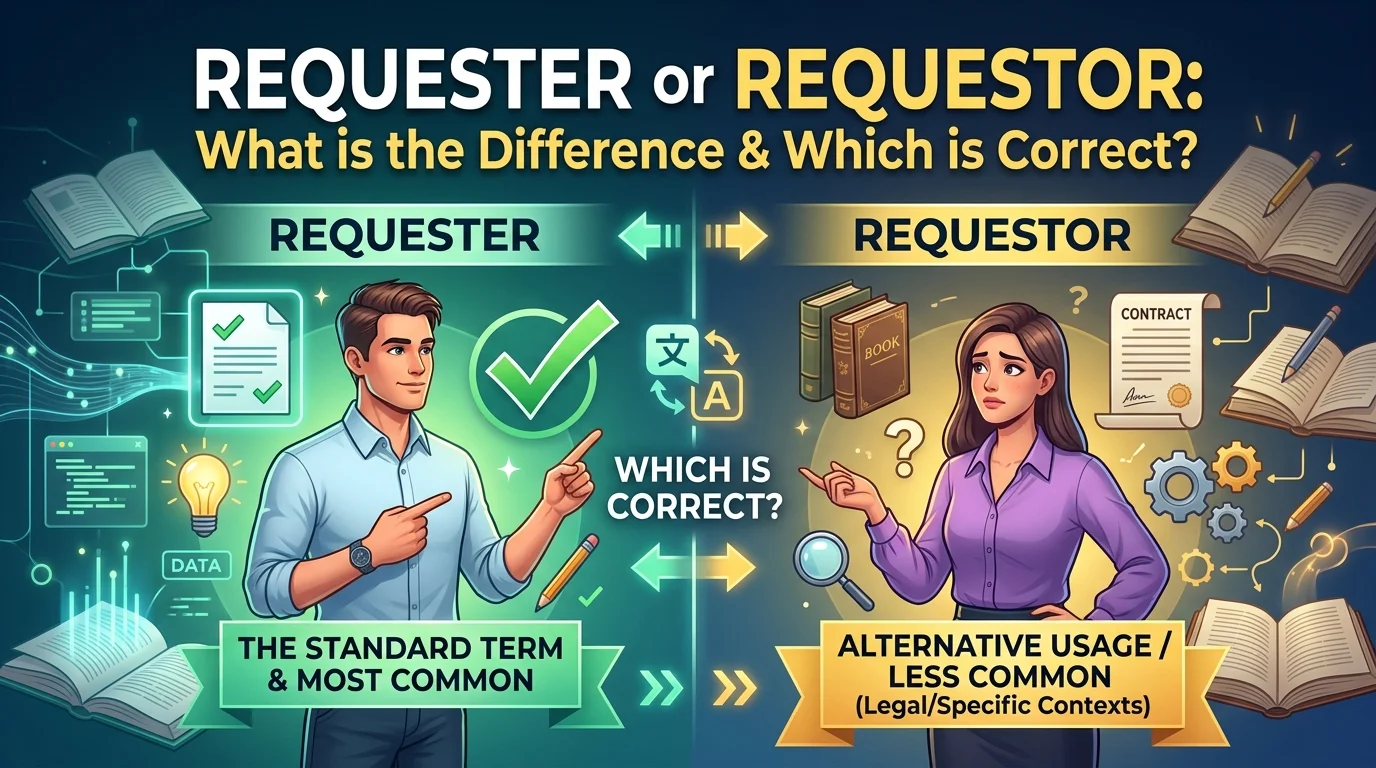
Understanding the difference between “requester” and “requestor” is important for clear professional writing, especially in legal, technical, and business contexts. Both words appear similar and often cause confusion, but they are used differently depending on style, formality, and regional preference. This guide explains their meanings, usage, and correct grammatical application in simple terms.
Comparison Overview
“Requester” and “requestor” both refer to a person who makes a request, but they are not always interchangeable. “Requester” is the more common and widely accepted form in modern English, while “requestor” is often seen in legal, technical, or formal documentation. Both relate to the act of requesting something, but their usage depends on context and writing style.
Definition of Requester
A requester is a person who asks for something, such as information, services, approval, or action. It is the standard and most commonly used term in everyday English, business communication, and education. The word is simple, clear, and widely understood.
Definition of Requestor
A requestor also means a person who makes a request, but it is less common in general English. It is more often used in legal documents, government systems, databases, and formal technical writing where precise terminology is preferred.
Main Differences Between Requester and Requestor
The main difference lies in usage frequency and context. “Requester” is preferred in general communication, while “requestor” appears in specialized or formal environments. Both have the same meaning, but “requester” feels more natural and modern.
| Feature | Requester | Requestor |
| Common usage | Very common | Less common |
| Context | Everyday English | Legal, technical |
| Formality | Neutral | Formal |
| Preference | Widely preferred | Niche usage |
| Meaning | One who requests | One who requests |
Grammar Guide
Both words function as nouns formed from the verb “request.” They describe a person performing the action of requesting something.
How each term is used in sentences
Requester:
- The requester submitted the form online.
- Each requester must provide identification.
- The system notifies the requester automatically.
- The requester asked for additional documents.
- The requester received approval within hours.
Requestor:
- The requestor must complete the legal form.
- The database records each requestor’s details.
- The requestor is responsible for verification.
- The requestor submitted a formal petition.
- The system logs the requestor information.
Common mistakes learners make
Many learners assume both words are equally standard in all contexts, which leads to inconsistent writing. Another common mistake is using “requestor” in informal writing where “requester” is preferred. Some also mistakenly think there is a difference in meaning, but both refer to the same role.
Simple rules to remember
Use “requester” in everyday communication, essays, emails, and general writing. Use “requestor” only when working with legal, technical, or system-based documents where that term is specifically required. If unsure, “requester” is usually the safer choice.
Quick tips for writing and speaking
In spoken English, “requester” is almost always used. In writing, match your word choice to the audience. For professional or public-facing content, “requester” keeps language natural and clear. For official records or compliance documents, “requestor” may be required.
When to Use Each One
Use “requester” when writing emails, reports, academic content, customer service communication, or general instructions. Use “requestor” when dealing with legal contracts, software systems, government forms, or regulatory documentation that specifically uses that terminology.
When NOT to Use Each One
Avoid using “requestor” in casual writing or conversation because it can sound overly technical or outdated. Avoid switching between both terms in the same document, as it creates inconsistency. Do not assume they carry different meanings, since they do not.
Which One to Use (Decision Guide)
If your audience is general readers, students, or customers, choose “requester.” If your document is legal, technical, or system-generated and uses strict terminology, choose “requestor.” When in doubt, default to “requester” for clarity and readability.
Real-World Practical Examples
Requester Examples
- The requester filled out the online application form.
- Each requester must verify their email address.
- The requester asked for a status update on the order.
- The requester submitted a support ticket to IT.
- The requester received confirmation of approval.
- The requester contacted customer service for help.
Requestor Examples
- The requestor must sign the legal agreement.
- The system identifies each requestor by ID number.
- The requestor filed a formal complaint with the agency.
- The requestor’s data is stored in the database securely.
- The requestor is required to provide authorization.
- The requestor submitted documentation for review.
Self-Assessment (Fill in the Blanks)
- I will use ______ when referring to a person making a general request.
- The correct word is ______ because it is more common in everyday English.
- In legal documents, ______ is often preferred.
- A ______ is someone who asks for information or services.
- The system logs each ______ in the database.
- ______ is more widely used in modern writing.
- The ______ submitted a support ticket.
- Official forms may use the term ______ instead of requester.
- ______ is the safer choice for general communication.
- The ______ must complete verification steps.
- In casual writing, ______ is preferred.
- A ______ can be a customer or user requesting help.
- Government systems sometimes use the term ______.
- The ______ received a response from support.
- ______ is less common in everyday English.
- The ______ filed an application for approval.
- Both terms refer to someone who makes a ______.
- In technical systems, ______ may appear in logs.
- The ______ asked for additional documents.
- Choose ______ when writing for a broad audience.
Answers
- requester
- requester
- requestor
- requester
- requestor
- requester
- requester
- requestor
- requester
- requestor
- requester
- requester
- requestor
- requester
- requestor
- requestor
- request
- requestor
- requester
- requester
Final Verdict
Both “requester” and “requestor” refer to the same concept, but they are not used equally. “Requester” is the preferred and more natural choice in most writing situations, including everyday communication and professional contexts. “Requestor” is reserved for formal, legal, or technical environments where specific terminology is required. Choosing the right word depends mainly on audience and context, but in general writing, “requester” is the best and safest option.
Conclusion About Requester or Requestor
The terms requester and requestor both describe someone who makes a request, but their usage varies depending on context and writing style. In modern English, requester is the preferred and more widely accepted spelling across business communication, academic writing, and everyday use. It feels more natural, clear, and aligned with current language standards, making it the safer choice for most writers. Meanwhile, requestor still exists in legal, administrative, and technical environments where traditional terminology is maintained for consistency within systems or regulations. Even though both words share the same meaning, selecting the right form helps improve readability and professionalism. For most content creators and professionals, using requester ensures clarity and avoids confusion. Ultimately, consistency is the key factor, and choosing the correct version based on your audience makes your writing more effective and trustworthy.
FAQs About Requester or Requestor
What does requester or requestor mean?
Both terms refer to a person or entity that makes a request for information, service, or action. The meaning is the same, but spelling usage differs depending on context. Requester is more common in modern English, while requestor appears in legal or technical environments where formal terminology is required.
Which spelling is more commonly used today?
Requester is the more commonly used spelling in today’s English. It is preferred in business writing, academic content, and digital communication. Requestor is less frequent and usually limited to specialized legal or institutional documents. Most style guides recommend requester for clarity and modern usage.
Is requestor grammatically correct?
Yes, requestor is grammatically correct and accepted in English. However, it is less commonly used in general writing. It is mostly found in legal, technical, or administrative contexts. While correct, many writers prefer requester because it aligns better with modern language conventions and readability standards.
Why is requester preferred over requestor?
Requester is preferred because it is simpler, more natural, and widely recognized in modern communication. It fits standard English patterns and is used across most industries. Requestor, while valid, is more formal and less common, which can sometimes make it feel outdated in everyday writing.
Can I use requester in legal writing?
Yes, requester can be used in legal writing, but it depends on the style guide or institution. Some legal systems still use requestor for consistency in official terminology. However, many modern legal documents now adopt requester to improve clarity and readability for broader audiences.
Is there any difference in meaning between requester and requestor?
No, there is no difference in meaning. Both refer to someone who requests something. The only difference lies in spelling preference and usage context. Requester is more common in modern English, while requestor is used in formal or specialized environments.
Which one is better for academic writing?
Requester is generally better for academic writing because it is more widely accepted and easier for readers to understand. Academic style guides often favor simpler and clearer language, making requester the preferred choice over requestor in most scholarly contexts.
Do companies use requester or requestor?
Most companies use requester in business communication, IT systems, and documentation because it is clear and standardized. However, some older systems or industry-specific platforms may still use requestor depending on their internal terminology and historical setup.
Are requester and requestor interchangeable?
They are interchangeable in meaning but not always in usage. While both describe the same role, writers should avoid mixing them in the same document. Choosing one form and using it consistently ensures clarity and professionalism in writing.
Which spelling should I use in SEO content?
For SEO content, requester is usually the better choice because it is more commonly searched and widely recognized. It improves readability and aligns with modern search intent. Requestor can still be included if targeting legal or niche audiences, but requester is generally more effective.