
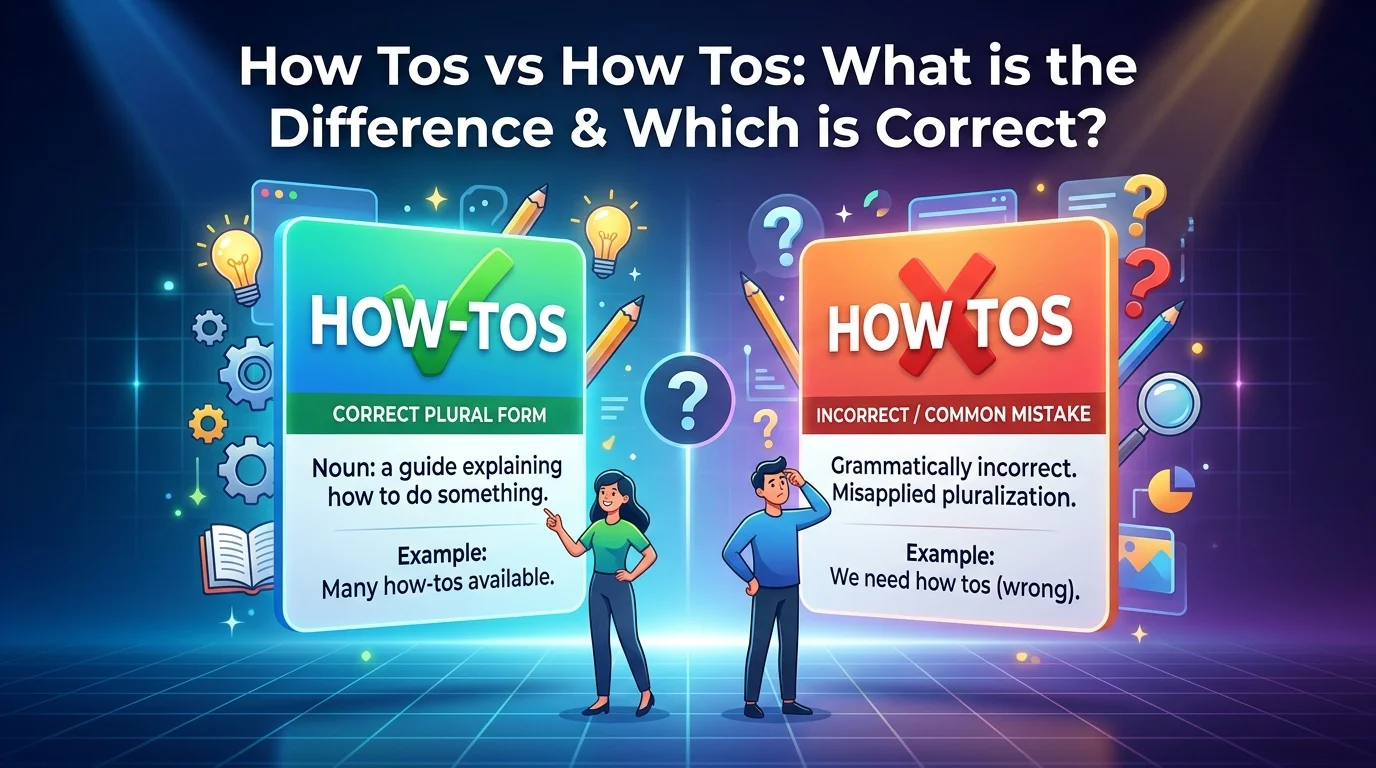
The phrase “how tos” is commonly used in writing, tutorials, and online guides to describe step-by-step instructions. However, confusion often arises when people compare similar forms of the same term, especially in spelling, spacing, or punctuation. This comparison helps clarify whether there is any real difference, how the term should be used correctly, and what learners and writers should keep in mind when using it in everyday communication.
Comparison Overview
“How Tos” and “How Tos” appear identical at first glance and, in most contexts, refer to the same idea: instructional guides or step-by-step explanations. They are used in blogs, manuals, and educational content to describe practical learning content. Since both forms are the same in spelling and structure, the comparison mainly focuses on usage clarity, formatting preferences, and writing conventions rather than meaning differences.
Definition of How Tos
“How Tos” refers to practical guides that explain how to complete a task step by step. These are instructional pieces designed to help readers learn procedures, solve problems, or understand processes in a simple way. The term is widely used in digital content, tutorials, and educational resources.
Definition of How Tos
“How Tos” is identical in meaning to the first form. It also refers to step-by-step instructional guides. There is no difference in definition, usage, or grammatical role between the two forms presented in this comparison.
Main Differences Between How Tos and How Tos
There are no meaningful differences between “How Tos” and “How Tos” because they are the same phrase. Any variation people perceive usually comes from formatting choices such as capitalization in titles or styling in headings. In real usage, both represent instructional content that explains processes or tasks in a structured way.
In writing, the only minor distinction may come from editorial style guides, where some prefer “How-Tos” with a hyphen or “how-to guides” as a phrase, but in this comparison both given forms remain identical in spelling and function.
Grammar Guide
“How Tos” functions as a plural noun phrase referring to multiple instructional guides. It is derived from the phrase “how to,” which introduces instructions or procedures. When pluralized, it generally represents collections of guides rather than a single instruction.
How each term is used in sentences
The term is used as a noun in sentences.
Examples:
- This website publishes many how tos for beginners.
- I read several how tos before assembling the furniture.
- The app includes useful how tos for new users.
Common mistakes learners make
A common mistake is writing it as “how to’s” using an apostrophe, which is incorrect in standard usage. Another mistake is confusing it with a verb phrase instead of treating it as a noun.
Simple rules to remember
- Use “how tos” as a plural noun without an apostrophe
- Treat it as a collection of guides, not an action
- Keep spelling consistent across headings and content
Quick tips for writing and speaking
- Use it in plural form when referring to multiple guides
- Prefer “how-to guides” in formal writing if clarity is needed
- Avoid apostrophes unless showing possession in rare contexts
When to Use Each One
Since both forms are identical, they are used in the same situations. You can use “how tos” when referring to instructional content, tutorials, or step-by-step explanations in blogs, articles, or educational materials.
When NOT to Use Each One
Avoid using “how tos” in formal academic writing unless it is part of a title or clearly defined section. It is also not suitable as a verb phrase since it only functions as a noun. Do not use apostrophes or alternative spellings that change its standard form.
Which One to Use (Decision Guide)
If you are writing casually or creating online content, use “how tos” as a simple plural noun. If you need a more formal tone, consider using “how-to guides” instead. Since both forms in this comparison are identical, the choice depends on style preference rather than correctness.
Real-World Practical Examples
How Tos Examples
- The blog offers how tos on cooking simple meals.
- I followed several how tos to fix my laptop issue.
- Students use how tos to complete science projects.
- The website features how tos for digital marketing beginners.
- I saved a few how tos for future reference.
How Tos Examples
- Many how tos explain how to use software tools effectively.
- The platform publishes how tos for online learning.
- I found useful how tos for improving writing skills.
- The guide section includes how tos for everyday tasks.
- Beginners rely on how tos to understand new concepts.
Self-Assessment (Fill in the Blanks)
- I read a ______ before assembling the desk.
- The website provides useful ______ for beginners.
- A ______ helps explain steps clearly.
- Students often follow ______ to complete assignments.
- I saved a ______ for later use.
- Many ______ are available online for free.
- A good ______ should be easy to follow.
- Teachers often share ______ with students.
- I learned cooking through simple ______.
- The app includes ______ for new users.
- A ______ explains a process step by step.
- Writers use ______ to teach practical skills.
- I searched for ______ on fixing my phone.
- Online platforms offer many ______.
- A ______ can make learning easier.
- I bookmarked several ______ for reference.
- Beginners depend on ______ for guidance.
- The tutorial section is full of ______.
- A clear ______ saves time.
- I often create ______ for my blog.
Answers
- how to
- how tos
- how to
- how tos
- how to
- how tos
- how to
- how tos
- how tos
- how tos
- how to
- how tos
- how tos
- how tos
- how to
- how tos
- how tos
- how tos
- how to
- how tos
Final Verdict
There is no real difference between “How Tos” and “How Tos” because they are the same term used in identical form. Both refer to instructional guides that explain processes step by step. The only variations you may encounter come from stylistic choices like hyphenation or formatting in different writing contexts. In practical usage, consistency matters more than variation, and the term should be used clearly as a plural noun representing helpful guides and tutorials.
Conclusion About How Tos or How Tos
In the end, the comparison between How Tos or How Tos is more about understanding usage than spotting real differences, since both forms carry the same meaning. They simply refer to helpful step by step guides that make learning and problem solving easier for readers. Whether used in blogs, tutorials, or educational content, the term remains a simple and effective way to describe instructional material. What truly matters is consistency in writing and choosing a clear format that fits your audience. When used correctly, it improves readability and helps users quickly find practical guidance. This makes it a valuable part of modern digital learning content across many fields and everyday situations.
FAQs
What does How Tos or How Tos mean?
It refers to instructional guides that explain how to complete tasks step by step. Both forms mean the same thing and are used to describe helpful tutorials or practical learning content found in blogs, manuals, and educational resources.
Is there any difference between How Tos or How Tos?
There is no real difference between them. Both phrases are identical in meaning and usage. Any variation usually comes from writing style or formatting preferences rather than grammar or definition.
Why do people get confused about How Tos or How Tos?
Confusion happens because of spelling styles, punctuation differences, or informal usage online. Many people assume variations exist, but in reality, both forms represent the same concept of instructional guides.
Is How Tos or How Tos grammatically correct?
Yes, both are grammatically acceptable when used as a plural noun referring to guides. However, some style guides prefer alternatives like how to guides or how to tutorials for clarity in formal writing.
Where is How Tos or How Tos commonly used?
It is commonly used in blogs, educational websites, tutorials, and user manuals. It helps describe step by step instructions that assist readers in learning or completing specific tasks easily.
Can How Tos or How Tos be used in formal writing?
It can be used in formal writing, but many professionals prefer more structured alternatives like instructional guides or step by step manuals to maintain a polished tone.
What is the correct spelling of How Tos or How Tos?
Both forms are the same in spelling and meaning. The correct usage depends more on context and consistency rather than variation, making either acceptable in most cases.
Is How Tos or How Tos singular or plural?
It is a plural noun phrase that refers to multiple instructional guides. The singular concept is usually expressed as how to or a how to guide.
Can How Tos or How Tos include examples?
Yes, it often includes practical examples to explain processes clearly. These examples help readers understand steps better and apply instructions in real situations.
Why are How Tos or How Tos important in learning?
They simplify complex tasks into easy steps, making learning faster and more accessible. This format helps beginners understand processes without confusion and improves practical understanding.

Daniel Brooks is an English educator with a passion for explaining similes and word comparisons in plain language. He covers topics like versus meanings, correct usage, and figurative language to help writers avoid common mistakes and improve clarity in everyday writing.